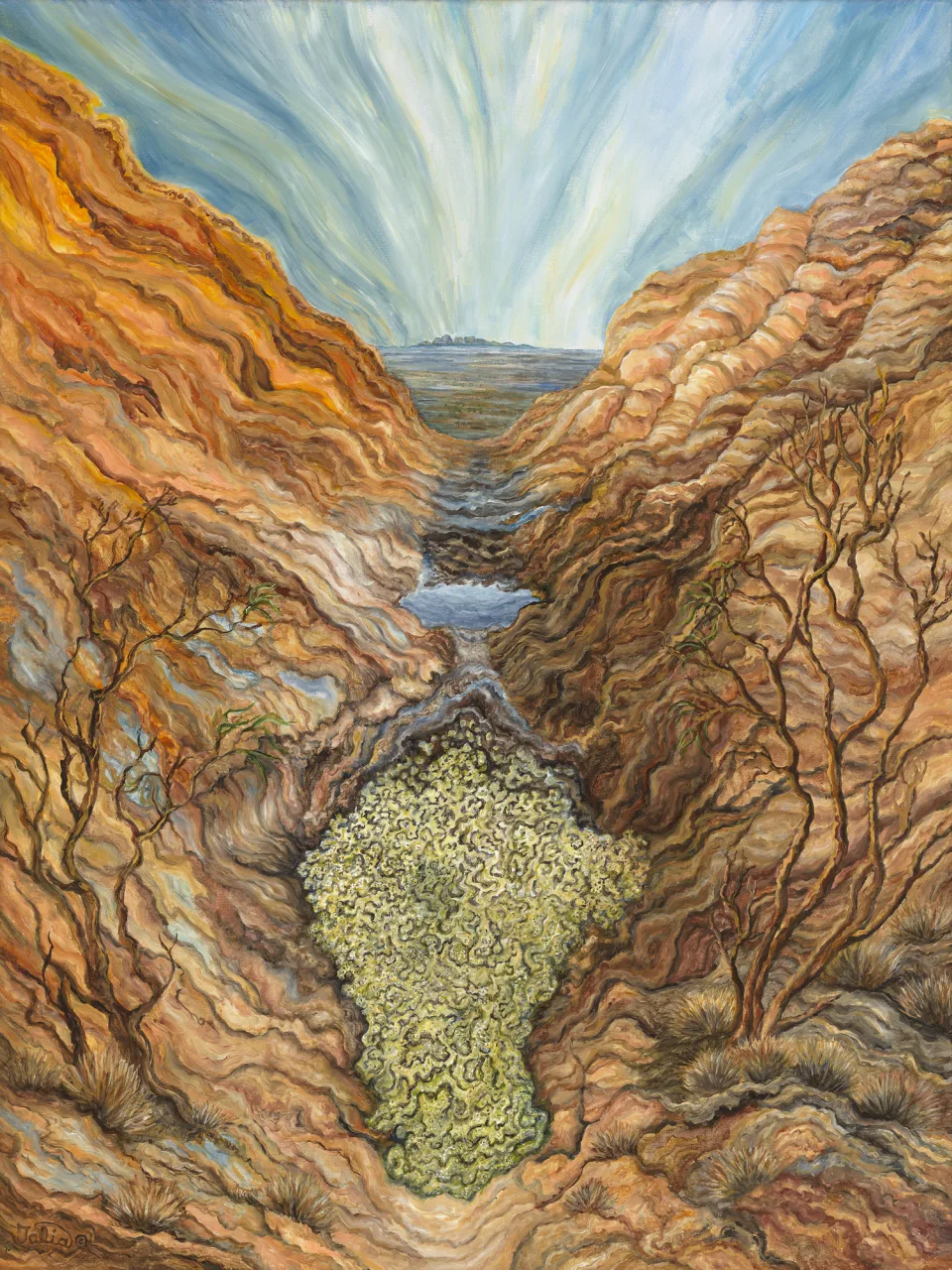
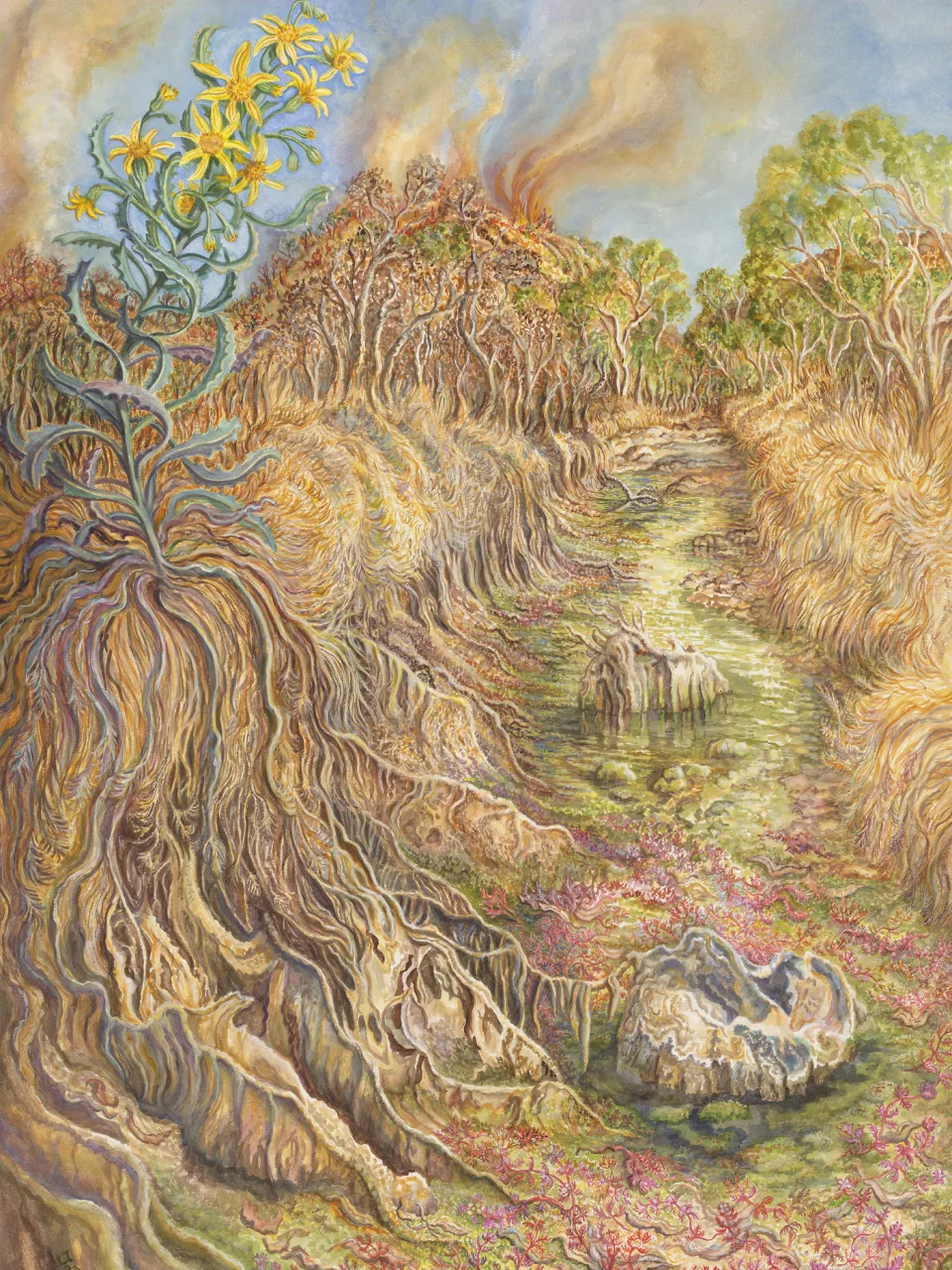
Artwork 42 Dust Storm Over the Northern Flinders
Section 26
Early Arrivals Adapt and Thrive as the Rainforests Retreat (Hop Bushes and Bullock Bushes—Sapindaceae Family)
Vulkathunha-Gammon Ranges National Park, Flinders Ranges, South Australia, South Australia
- 1. Alectryon oleifolius (bullock bush)
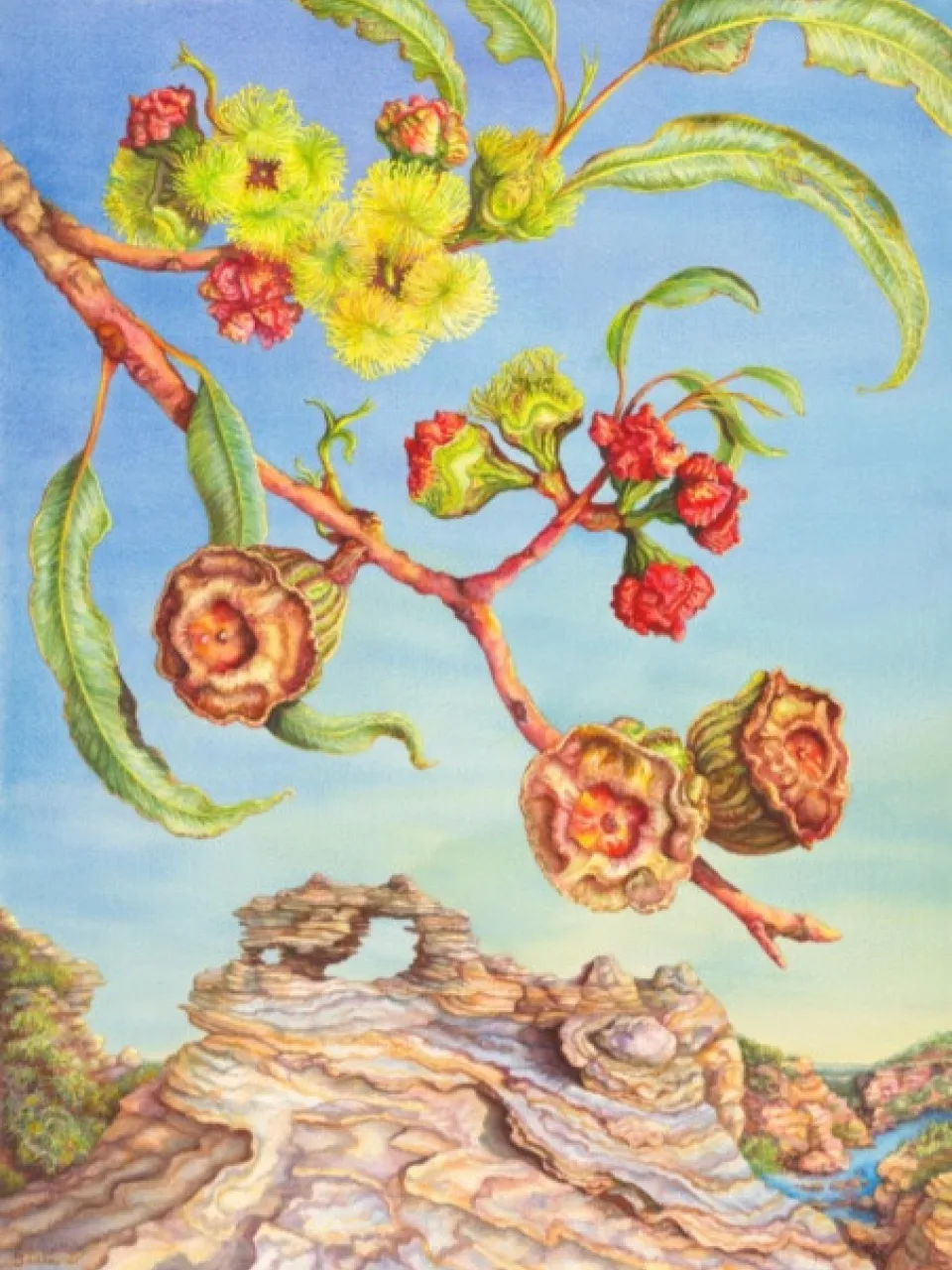
- 2. Eucalyptus gillii (curly mallee)
from the artist
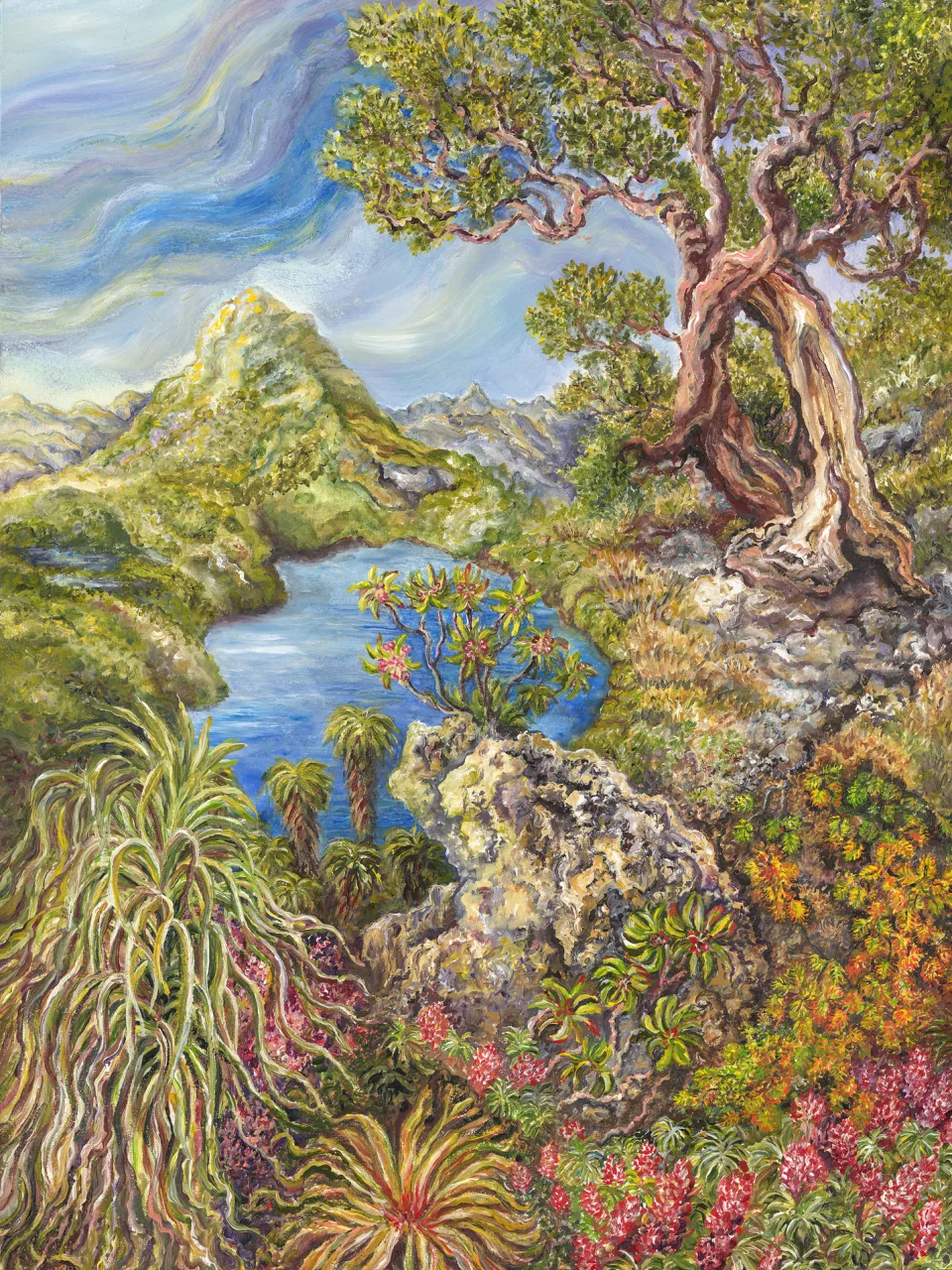
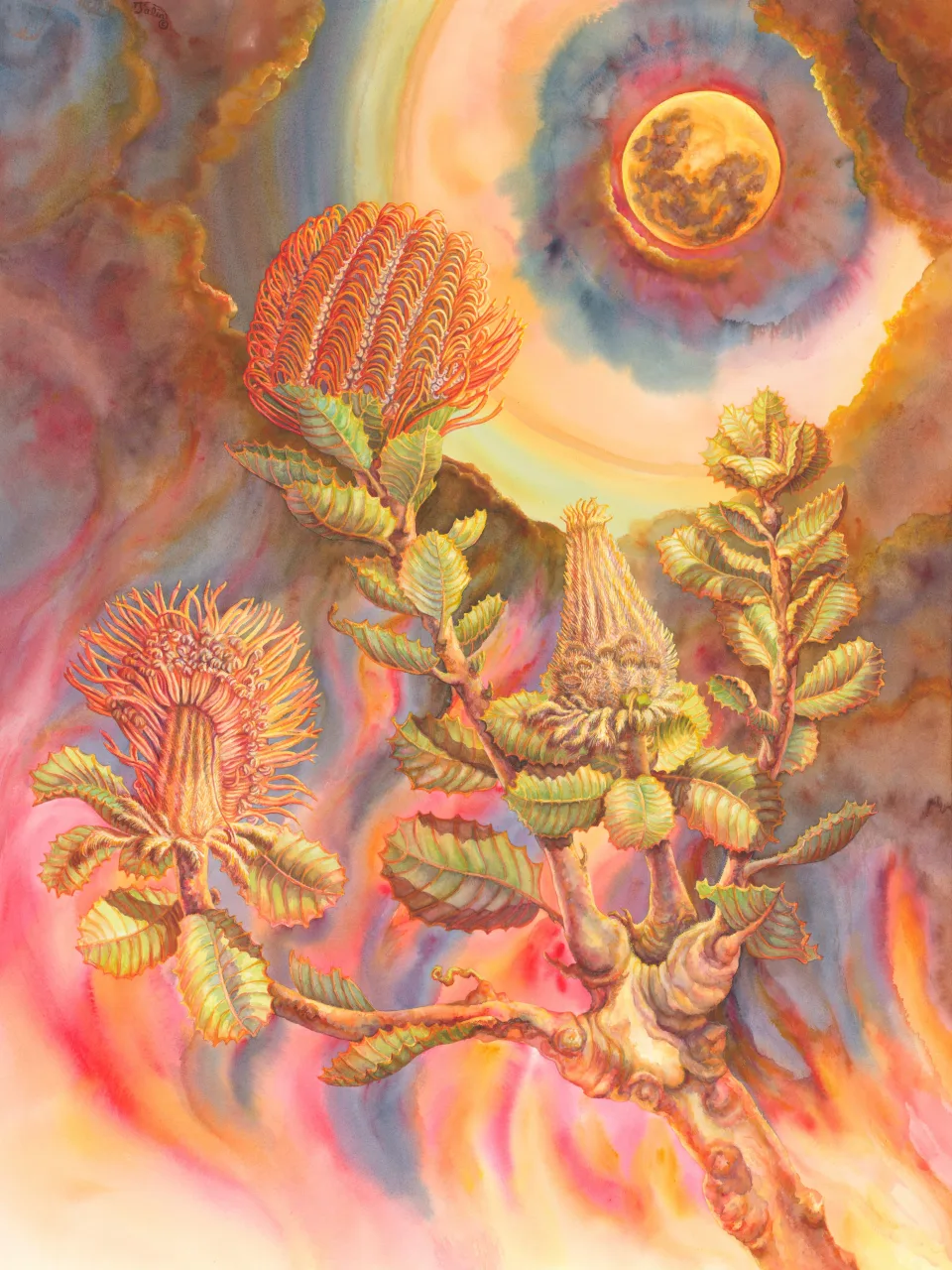
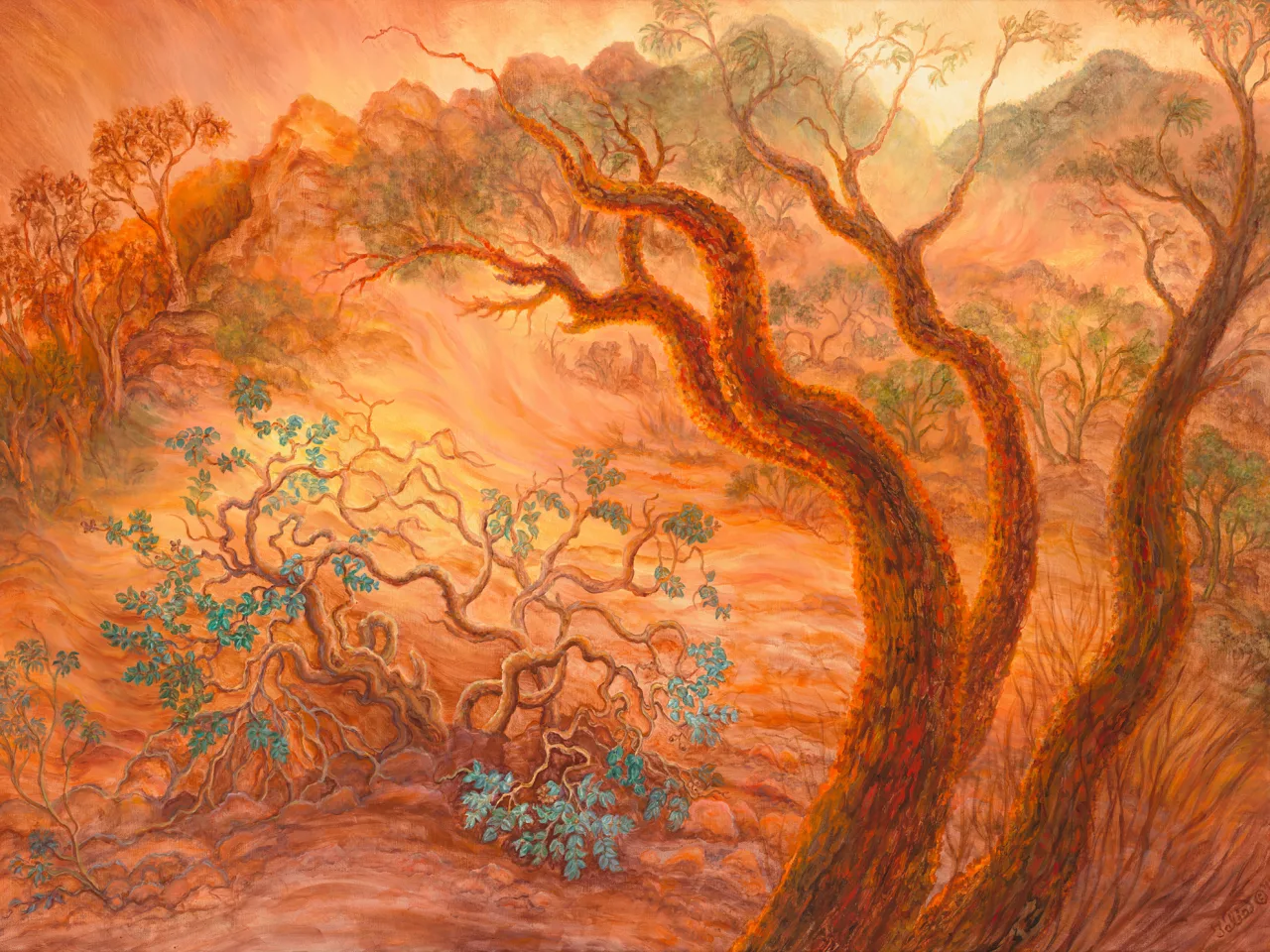
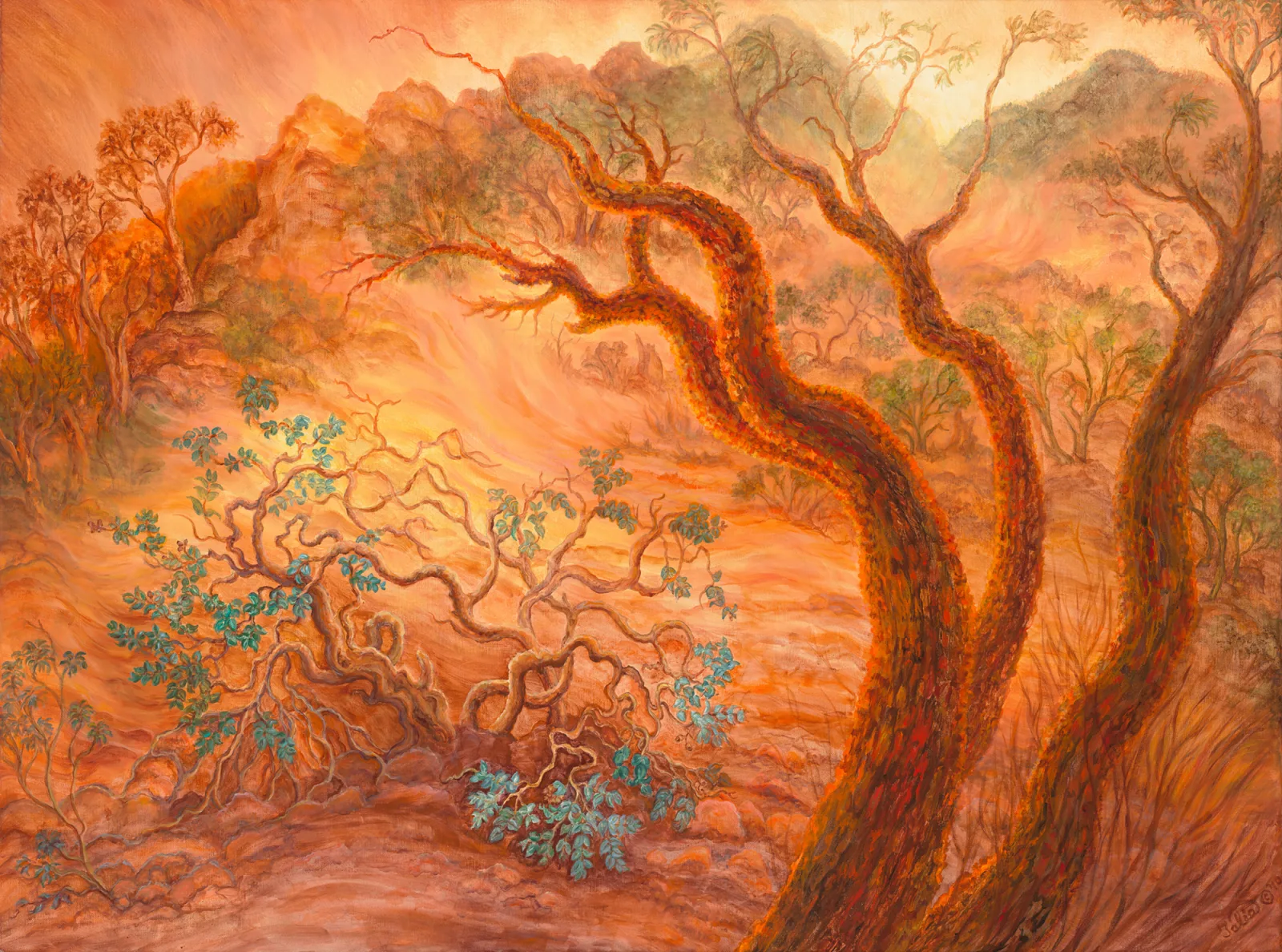
The dominant tree on the right of the painting is a “bullock bush”(Alectryon oleifolius). Australia has eight endemic species in the Alectryon genus, and some are supremely well adapted to dry, hot areas, as with this hardy species (Moore, 2005, p. 357; West, 1983/1988, p. 202).
In this work I attempted to capture the oppressive, wild, colourful atmosphere of the dust storms which engulfed my campervan in September 2009, in the Vulkathunha-Gammon Ranges National Park. By the time the dust storms started to arrive, I had Weetootla Campground to myself. Apparently, other campers knew something I didn’t!
Signs of the impending storm arrived mid-morning one day, after I had arisen early to sketch “curly mallee” (Eucalyptus gillii). Willy-willies formed one after another along the track and in the creek bed. The creek bed was acting as a wind tunnel, with very strong gusts buffeting my campervan, so I stayed parked away from the creek banks, and near the sturdy bullock bush, which provided some protection. By 4 pm the wind was violently gusting and the camp site became gradually enveloped in so much dust it could best be described as a hazy tan to grey “dust-out”. The Sun was soon covered, and the brownish-red dust cloud looked like a fire approaching. Thick orange-red dust swirls surrounded the van, and coloured the vague shapes of creek bed river red gums, mallee trees, and the nearby bullock bush.
Later I learnt the background to these violent dust storms. After years of drought, Kati Thanda-Lake Eyre had flooded, following heavy rains in Queensland and the Channel Country. As the waters receded, dust from dried particulates laid down in the floods created the dust storms, which were so extensive that they swept from the northern Flinders Ranges all the way to Sydney—and back to Queensland, where the floods originated.
The bullock bush in the dust storm painting is accompanied by the marvellous sprawling blue-green curly mallee which I sketched in the creek bed just before the storm. This plant has a very limited distribution—found naturally only in the northern Flinders Ranges. Although it does well in cultivation in the Adelaide area, this tree grows best in drier and hotter areas of the state, as here in the Gammon Ranges (Nicolle, 1997, p. 46). It has lovely silvery-blue to grey-green leaves. In the eerie red-orange dust storm light, the leaves glowed electric blue.