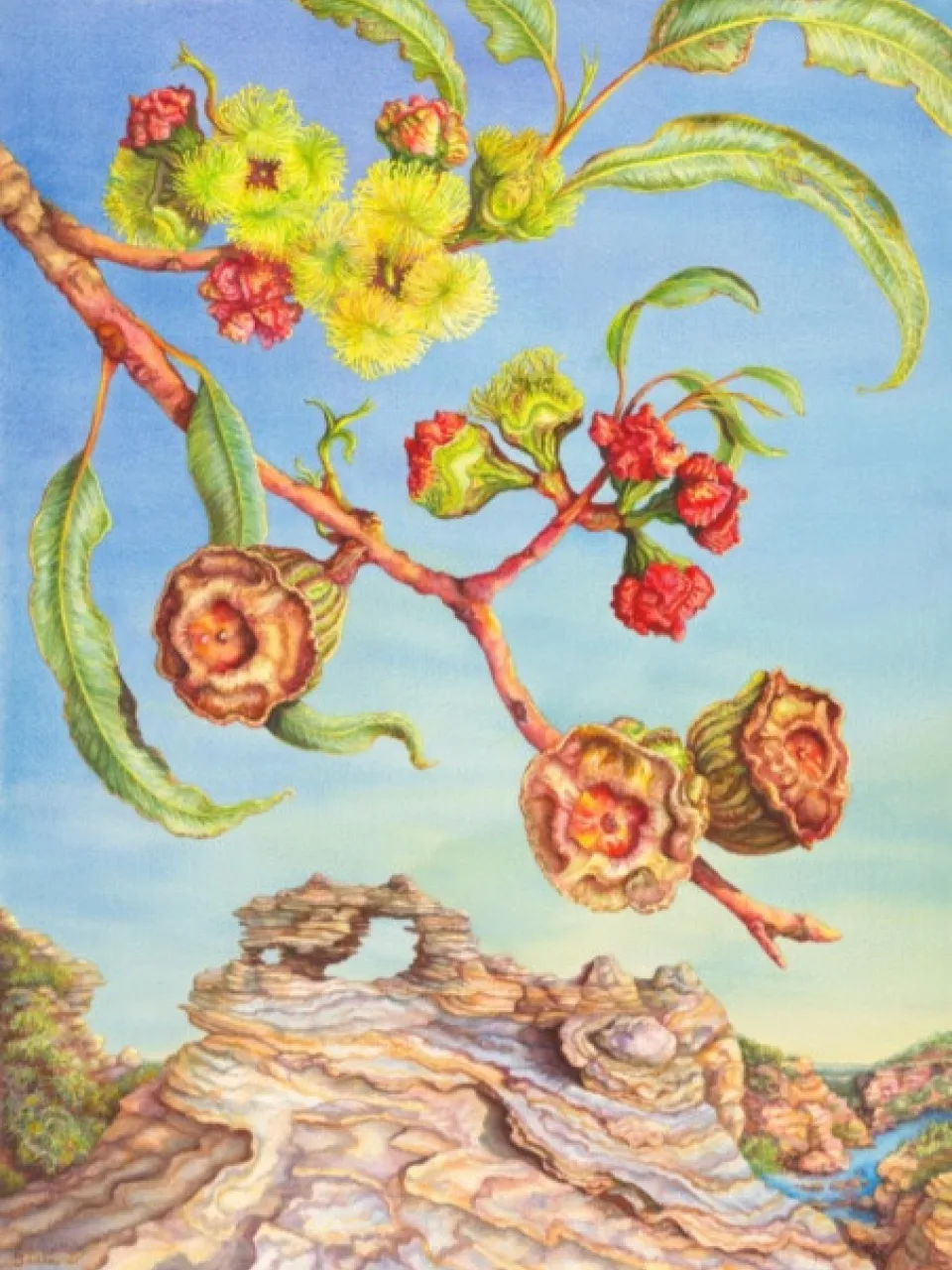
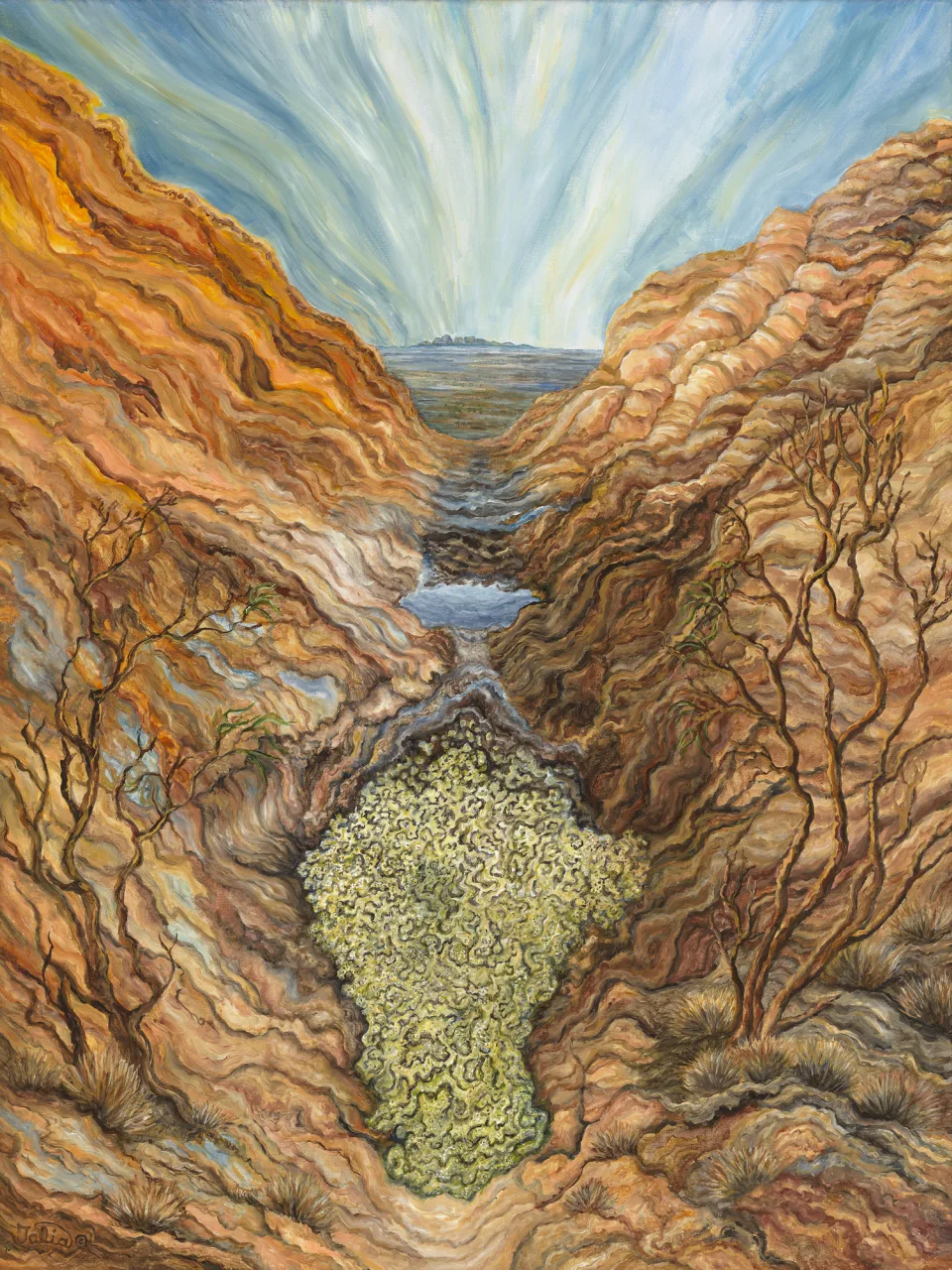
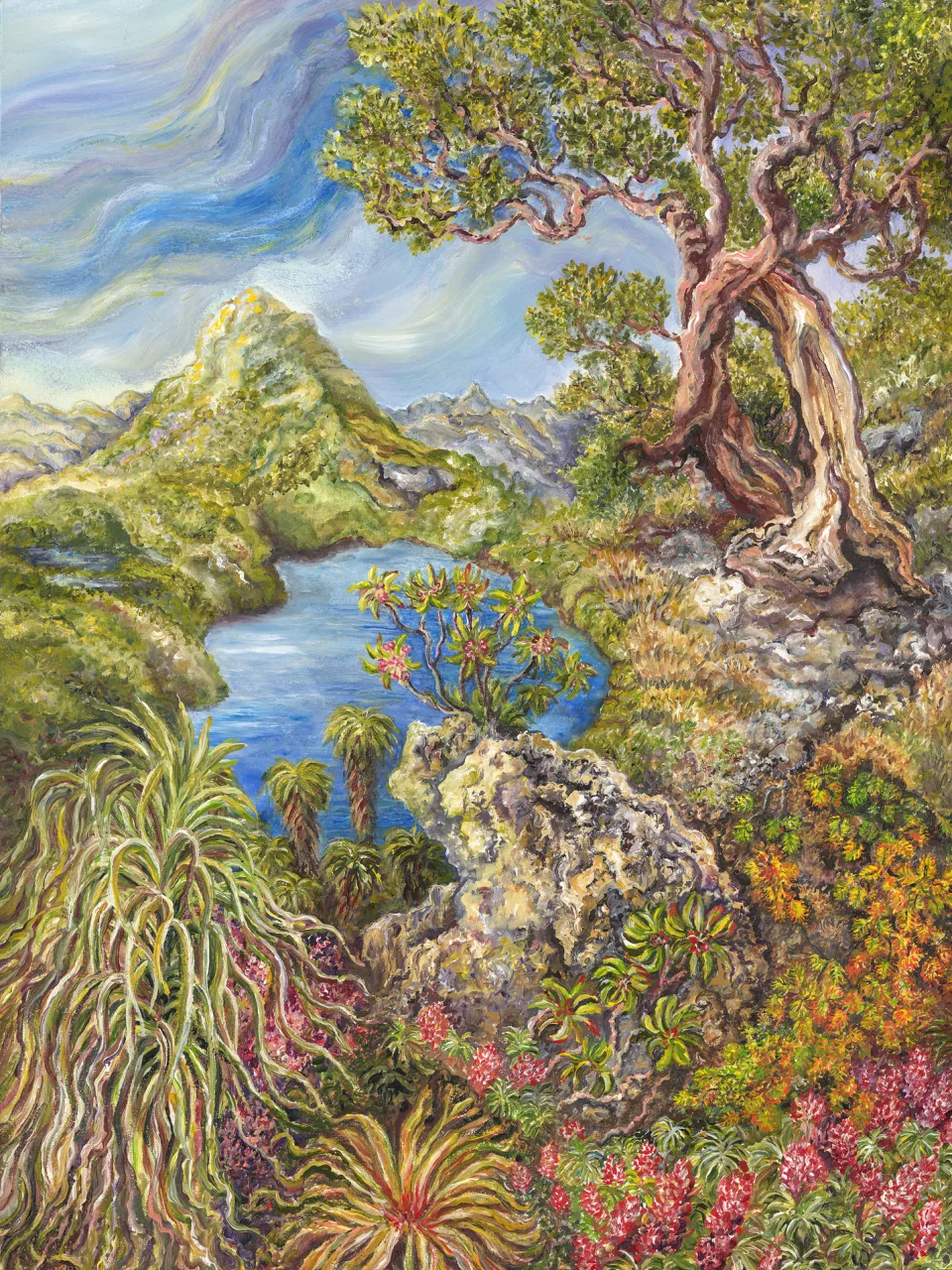
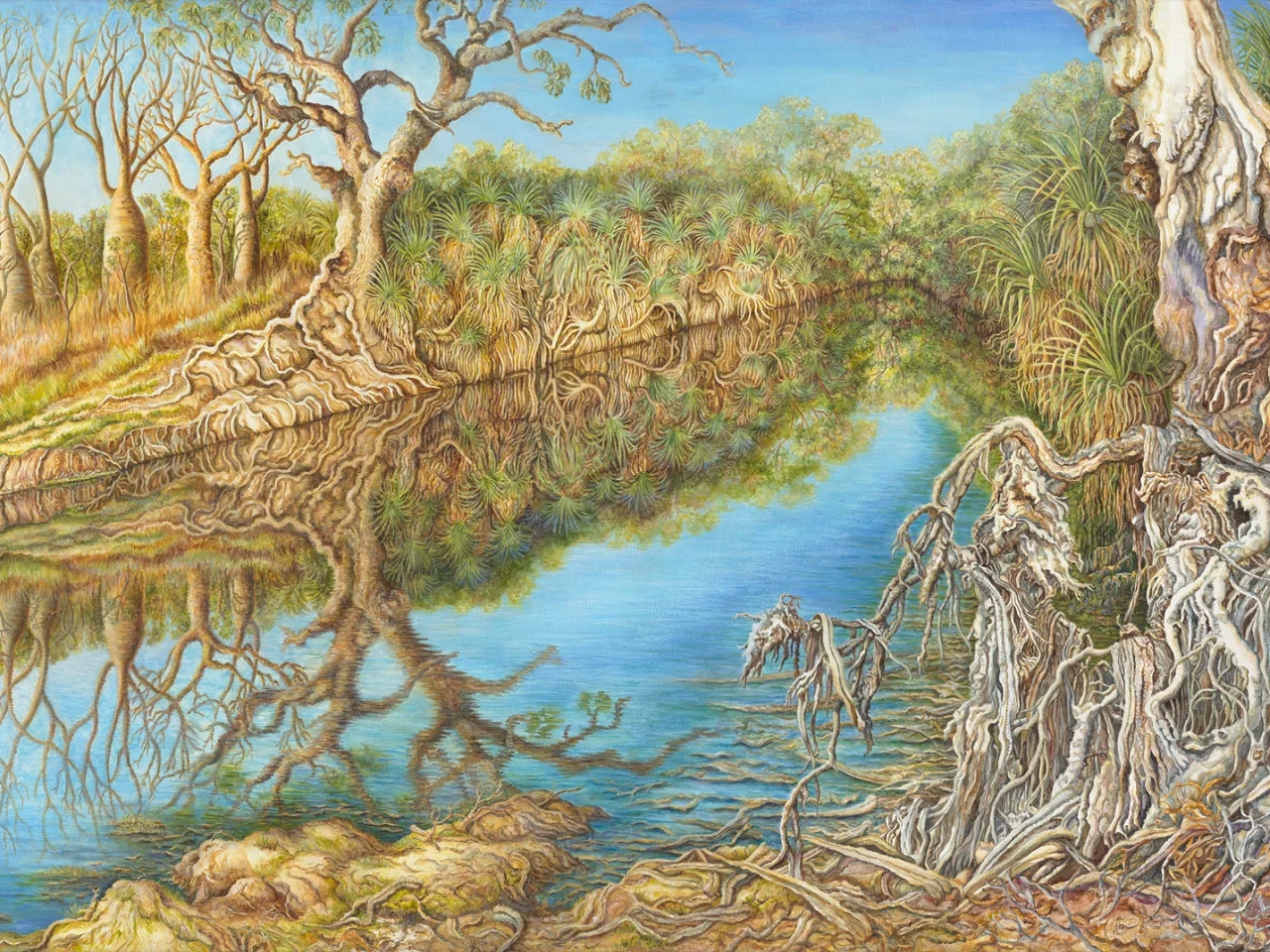
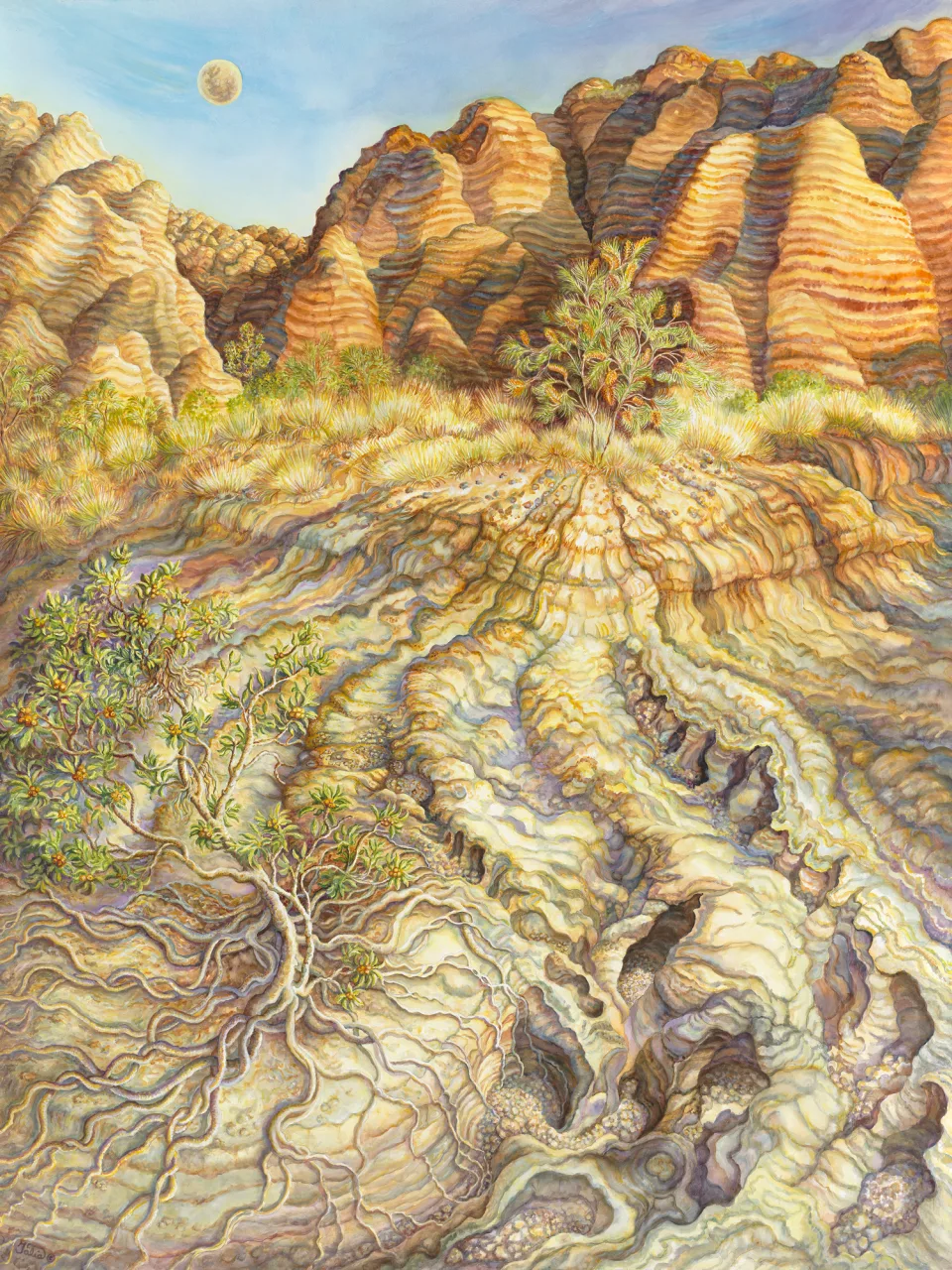
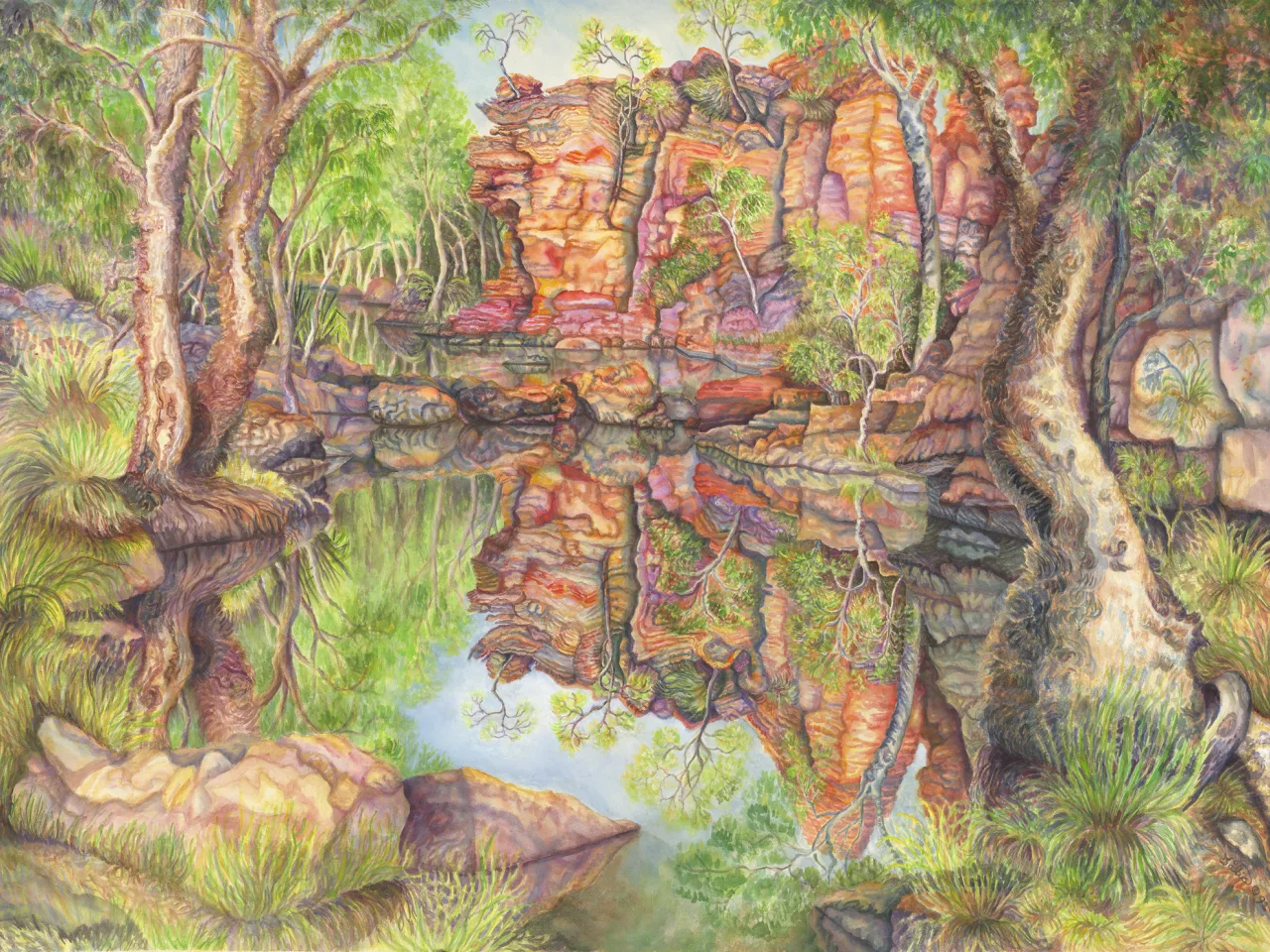
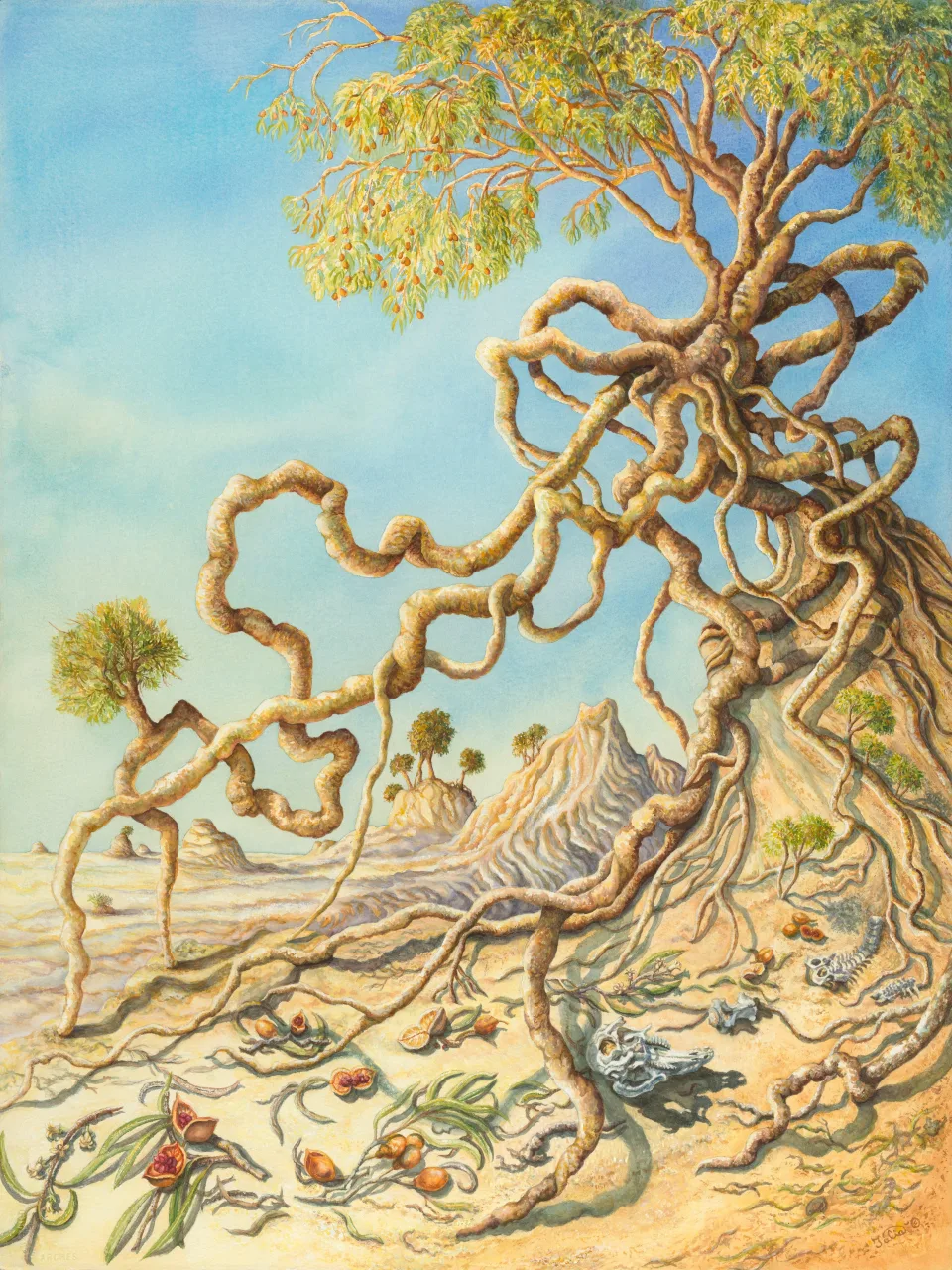
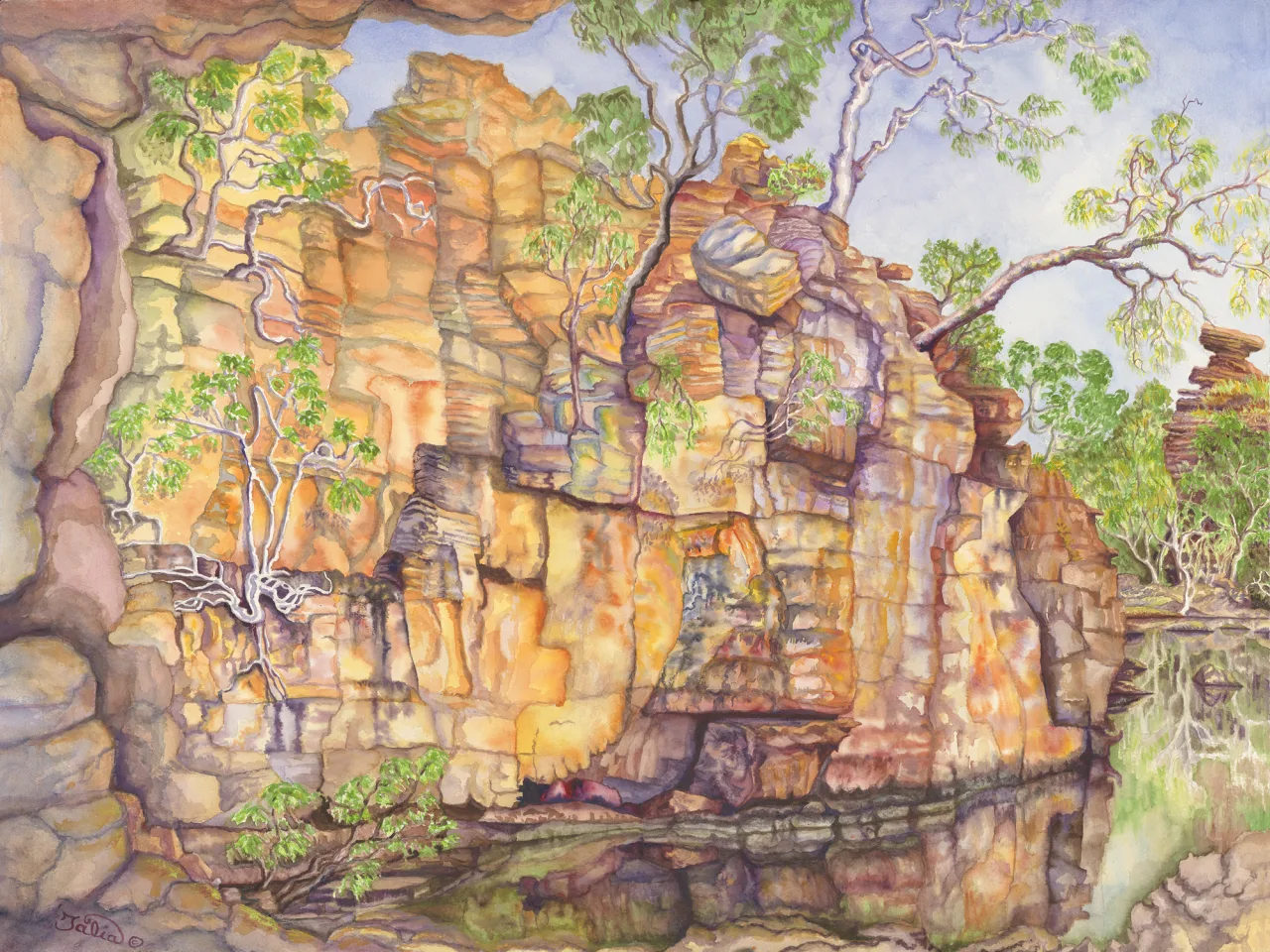
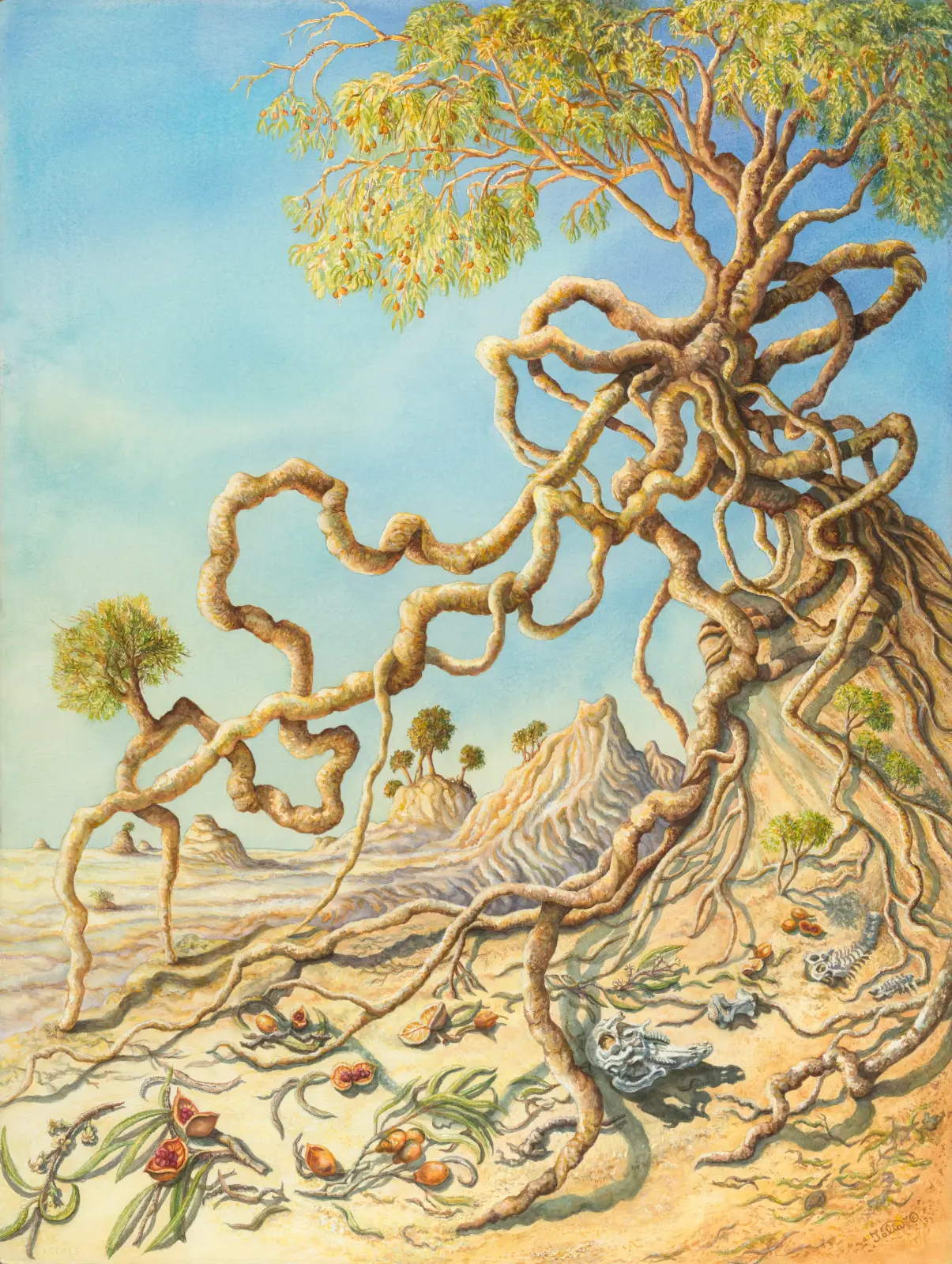
Artwork 61 Lake Mungo and the Weeping Pittosporum
Section 31
Plants of the Arid Zone—Desert Virtuosi
Mungo National Park, New South Wales, New South Wales
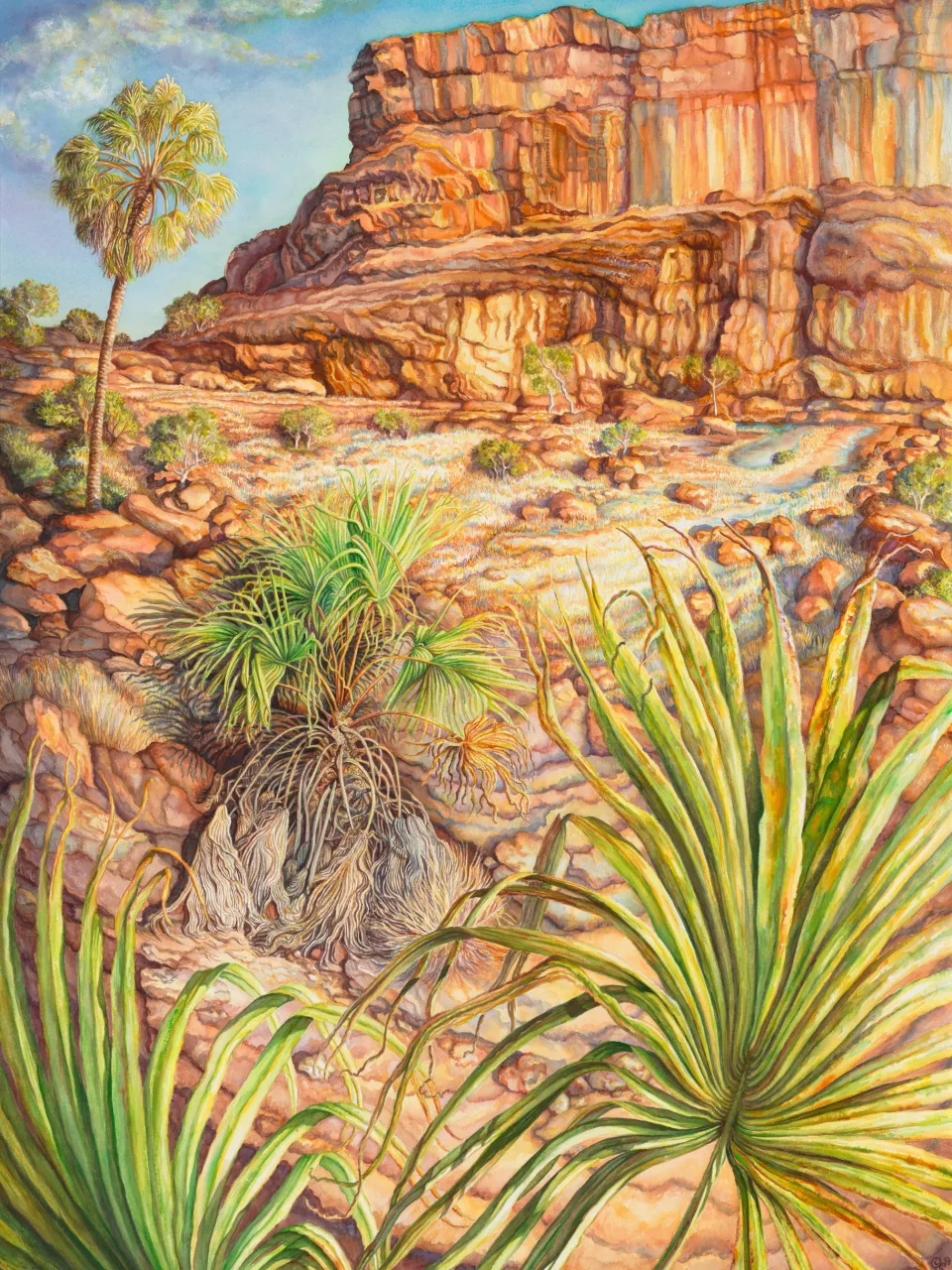
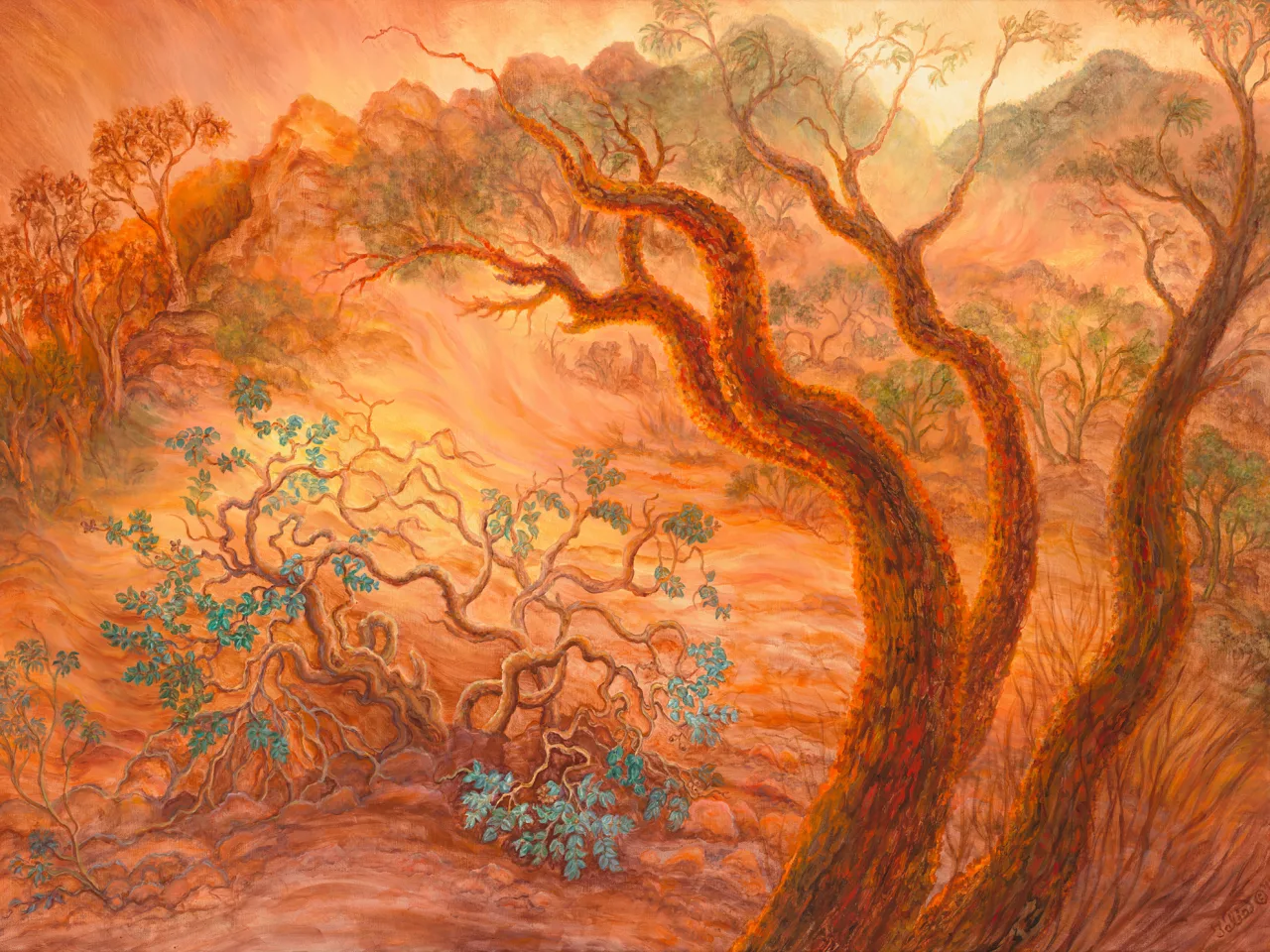
- 1. Pittosporum angustifolium (weeping pittosporum)
from the artist
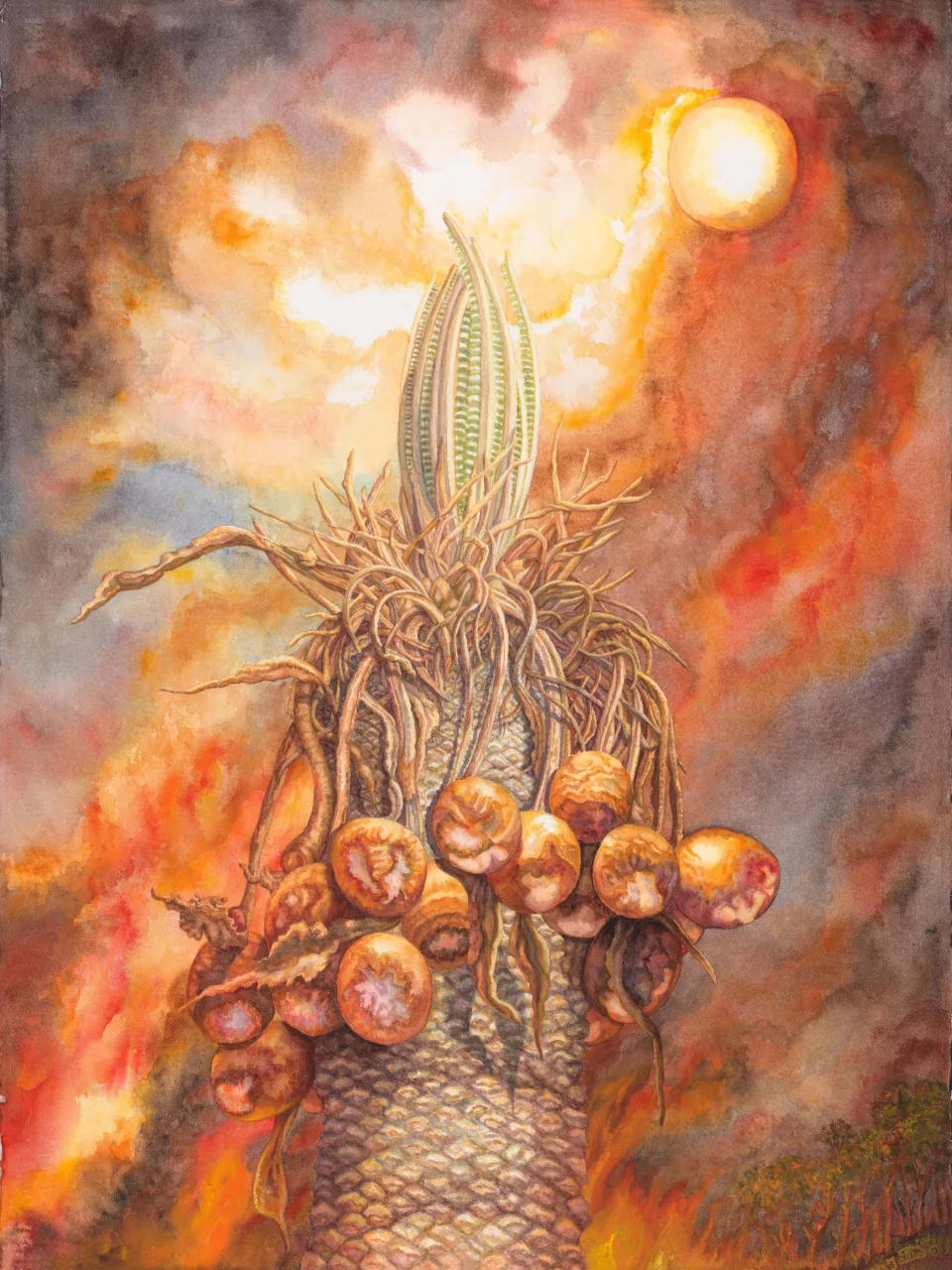
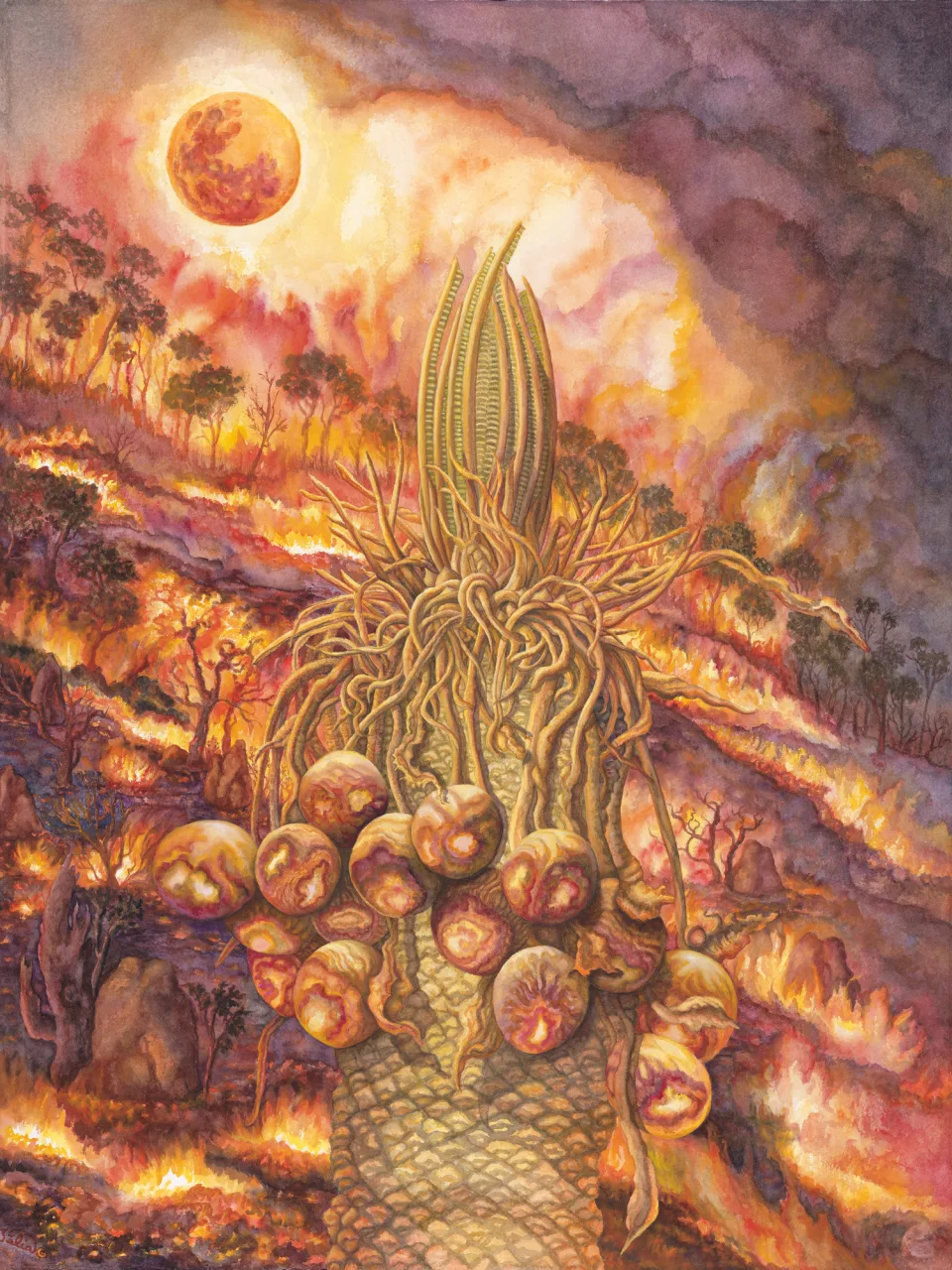
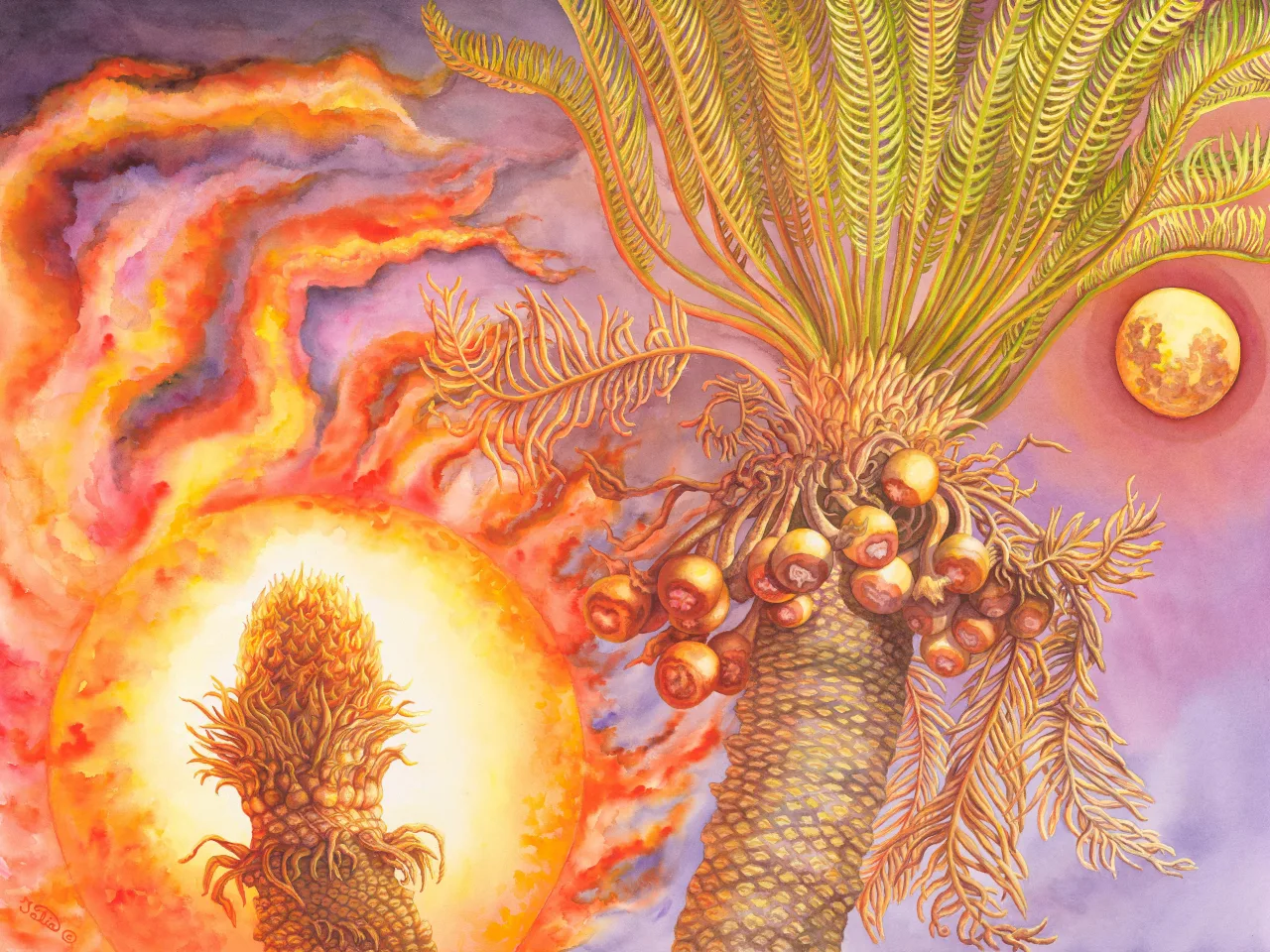
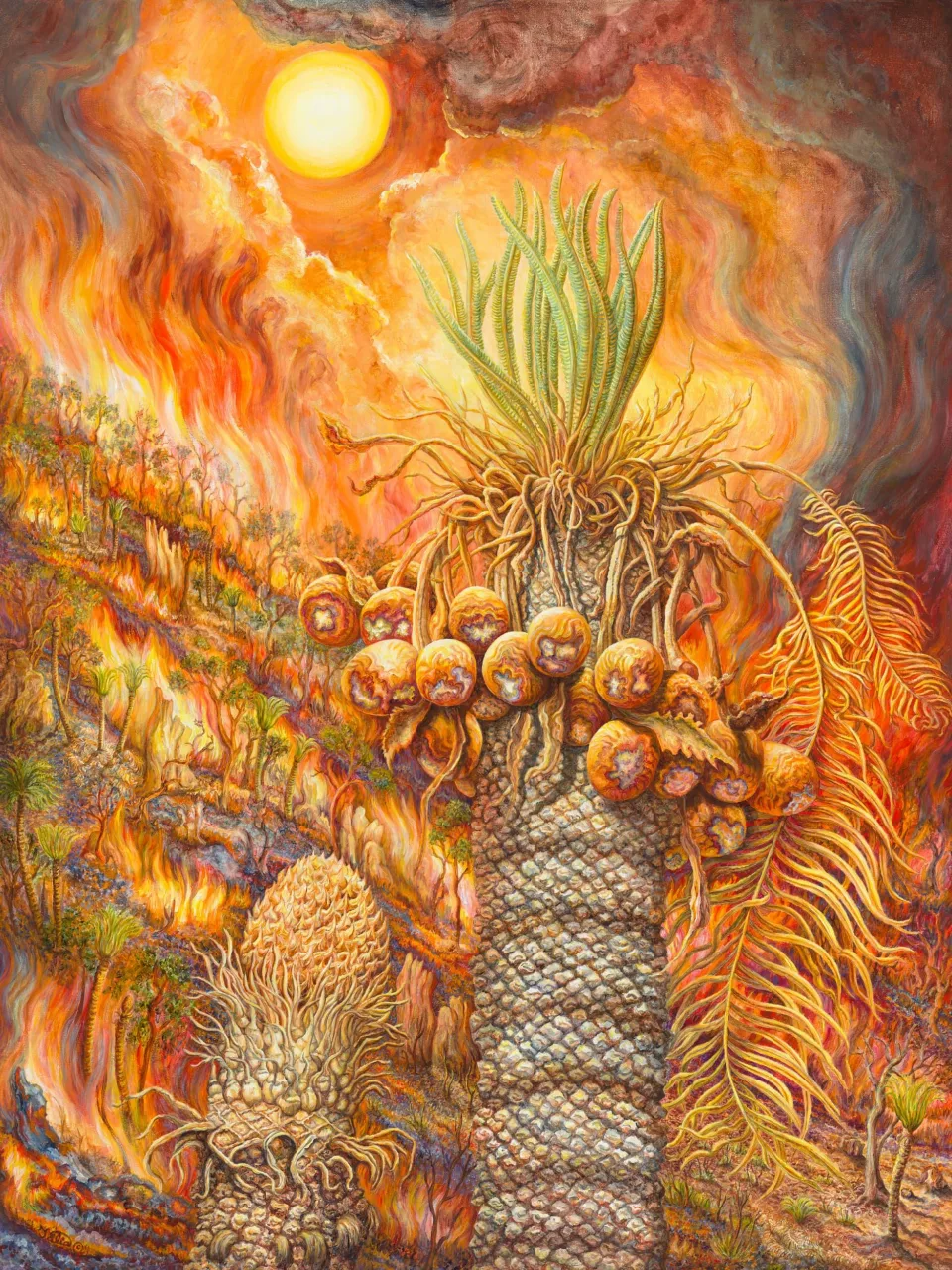
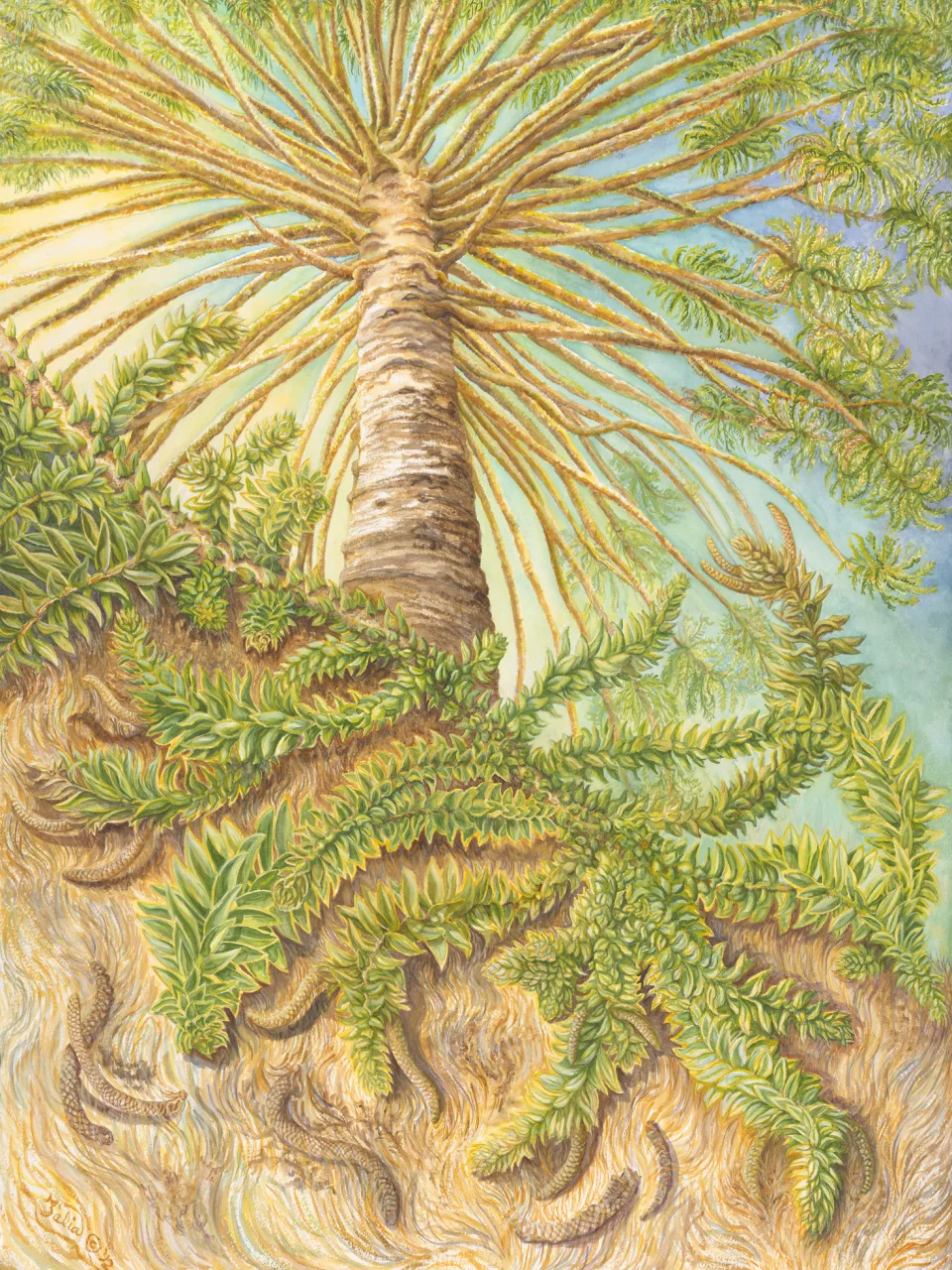
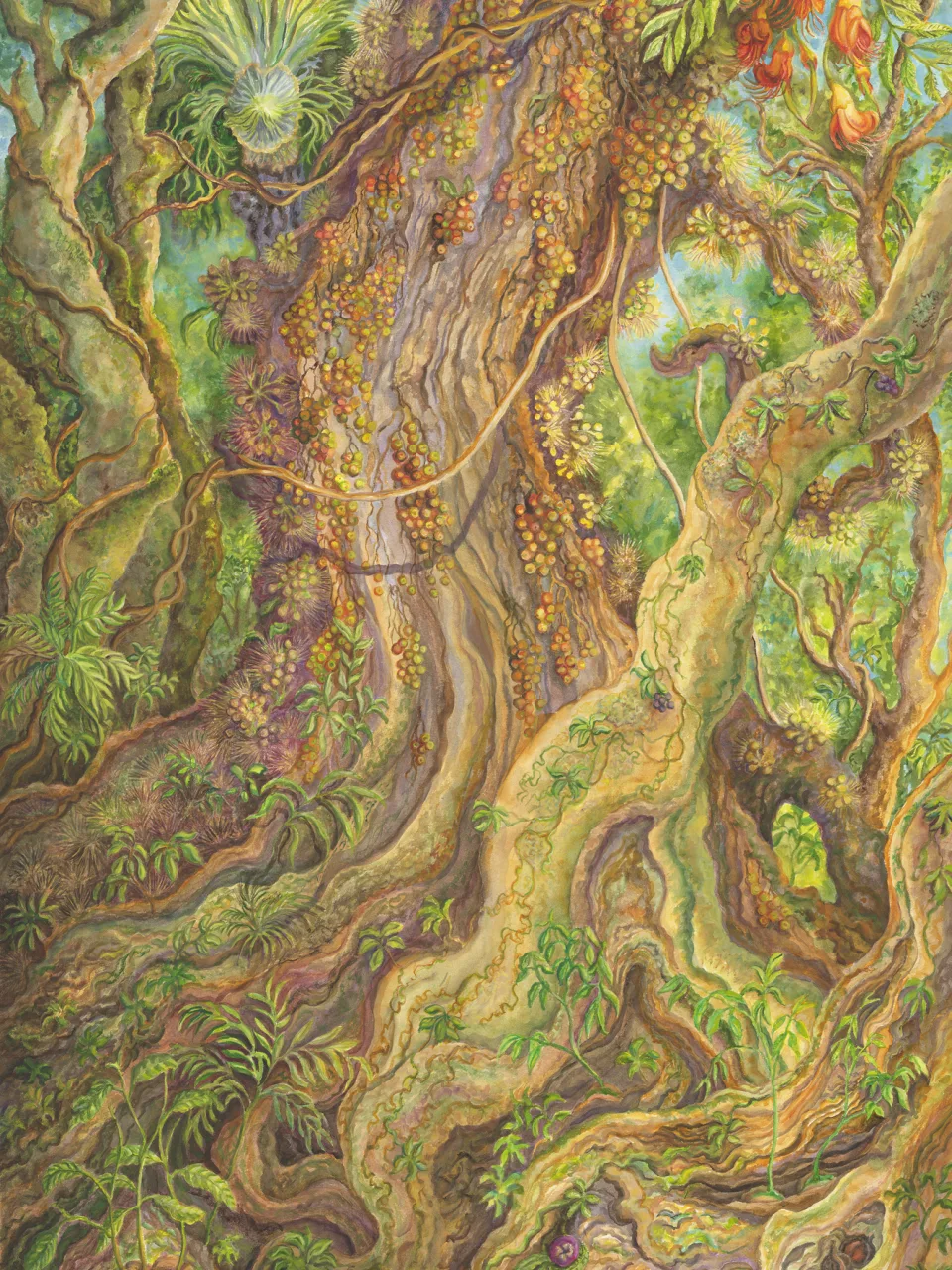
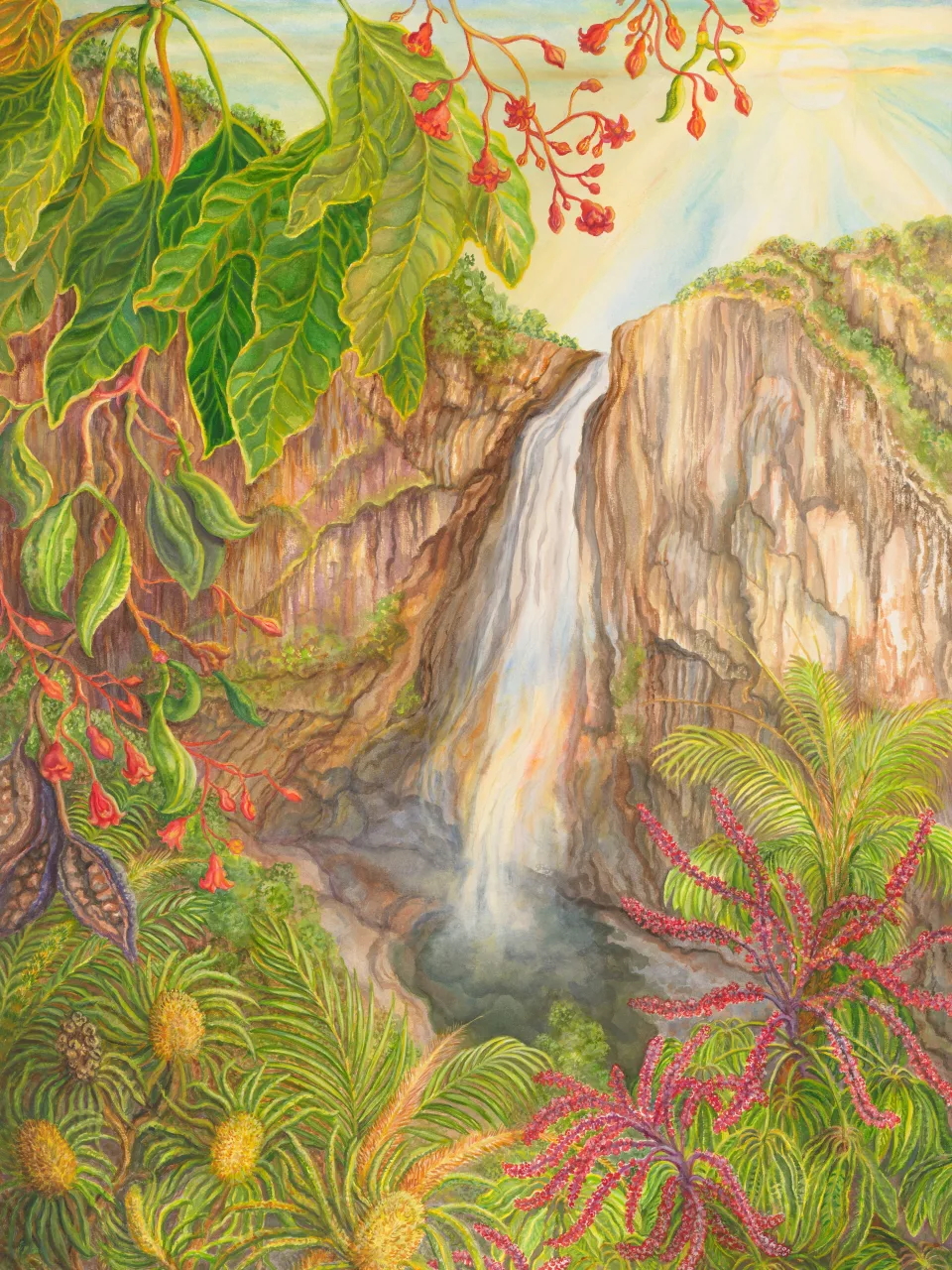
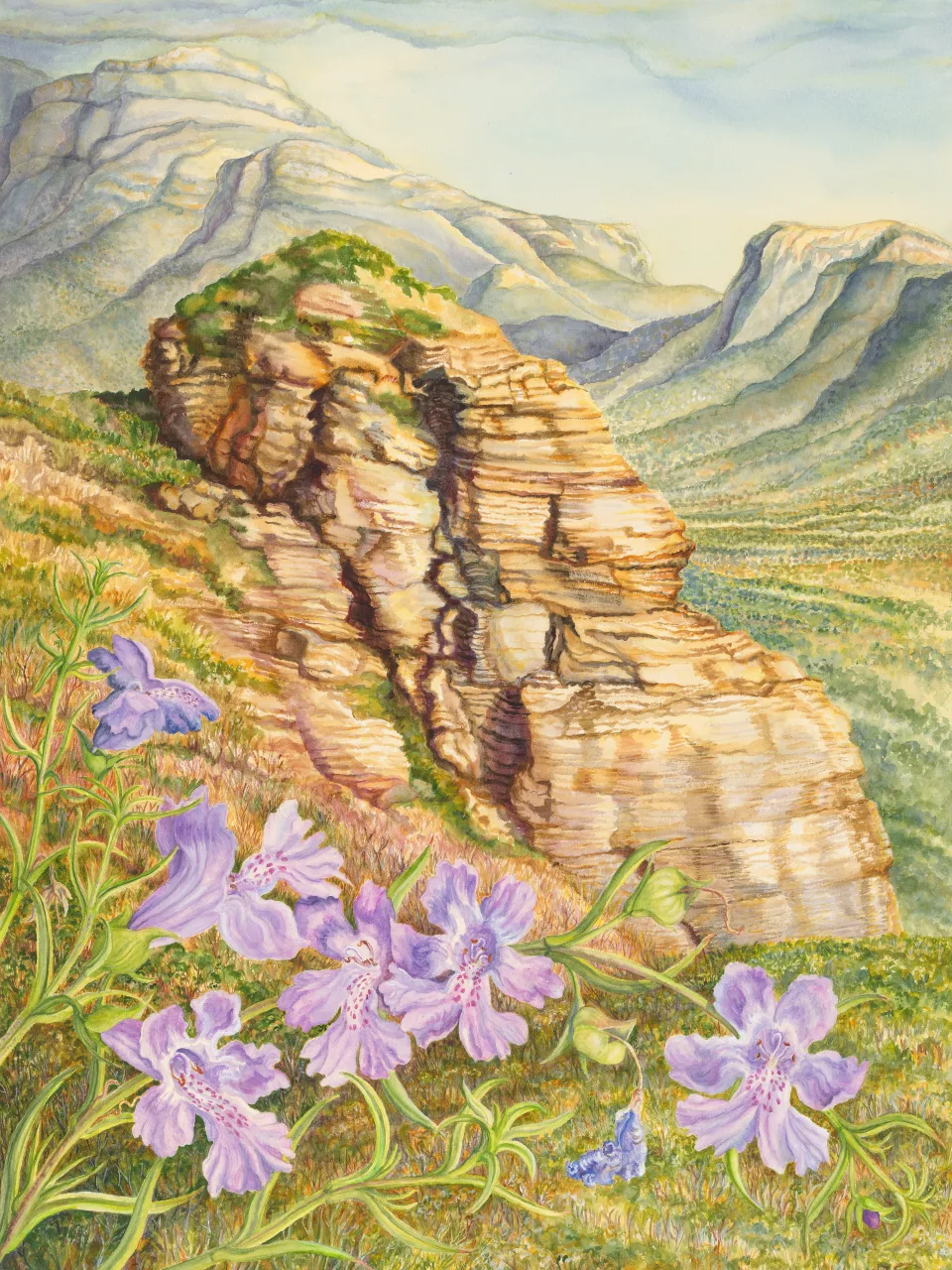
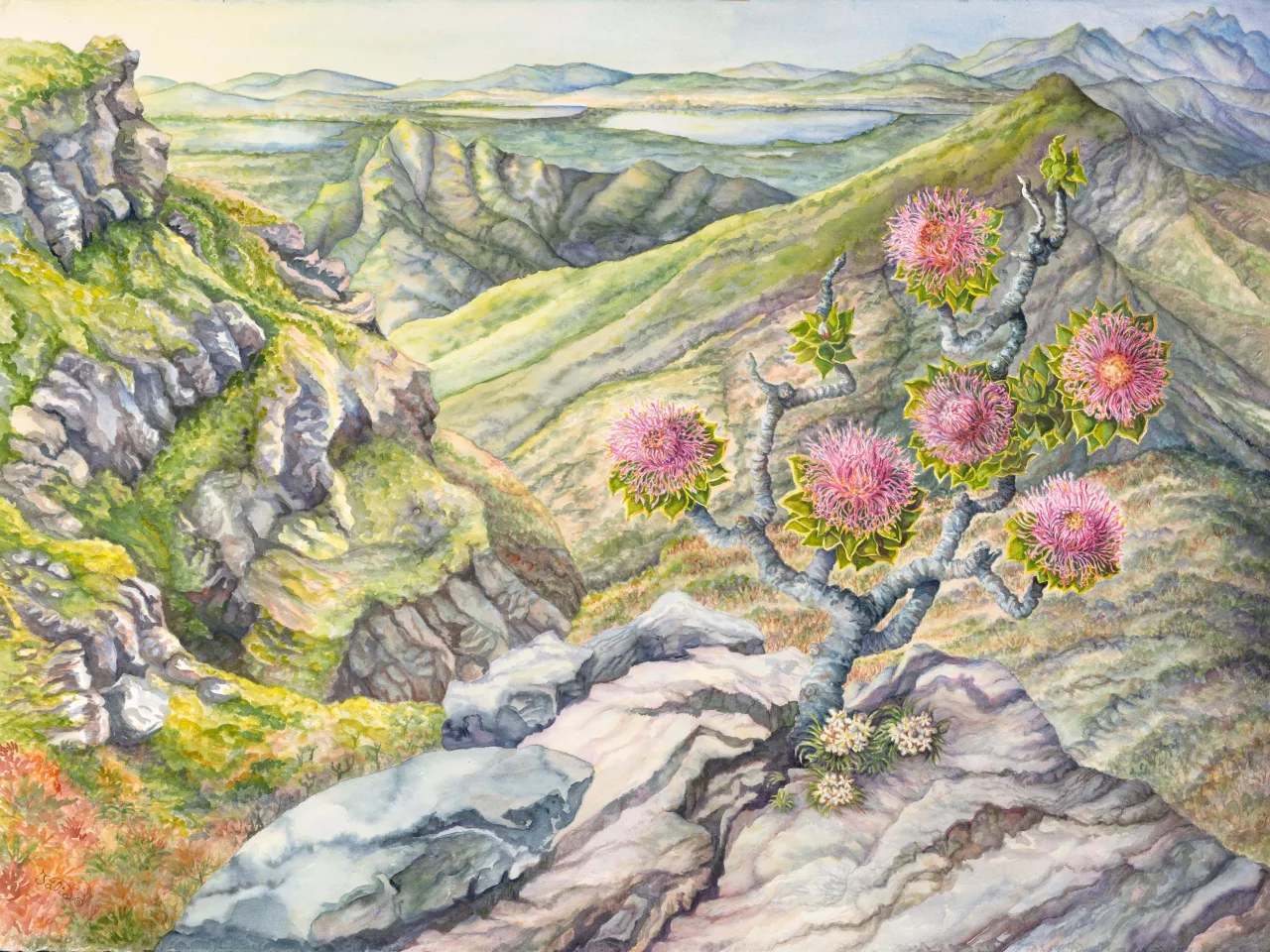
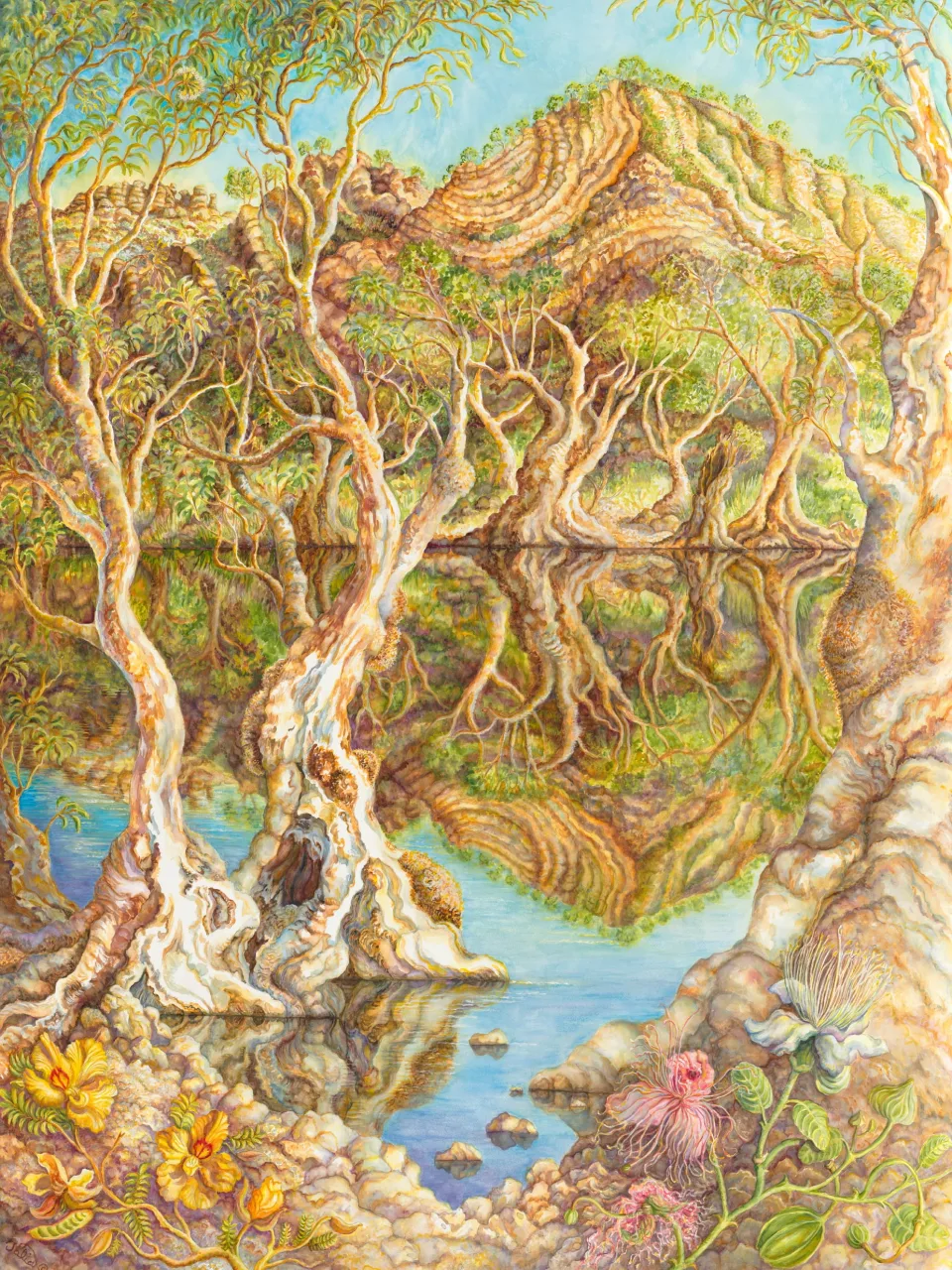
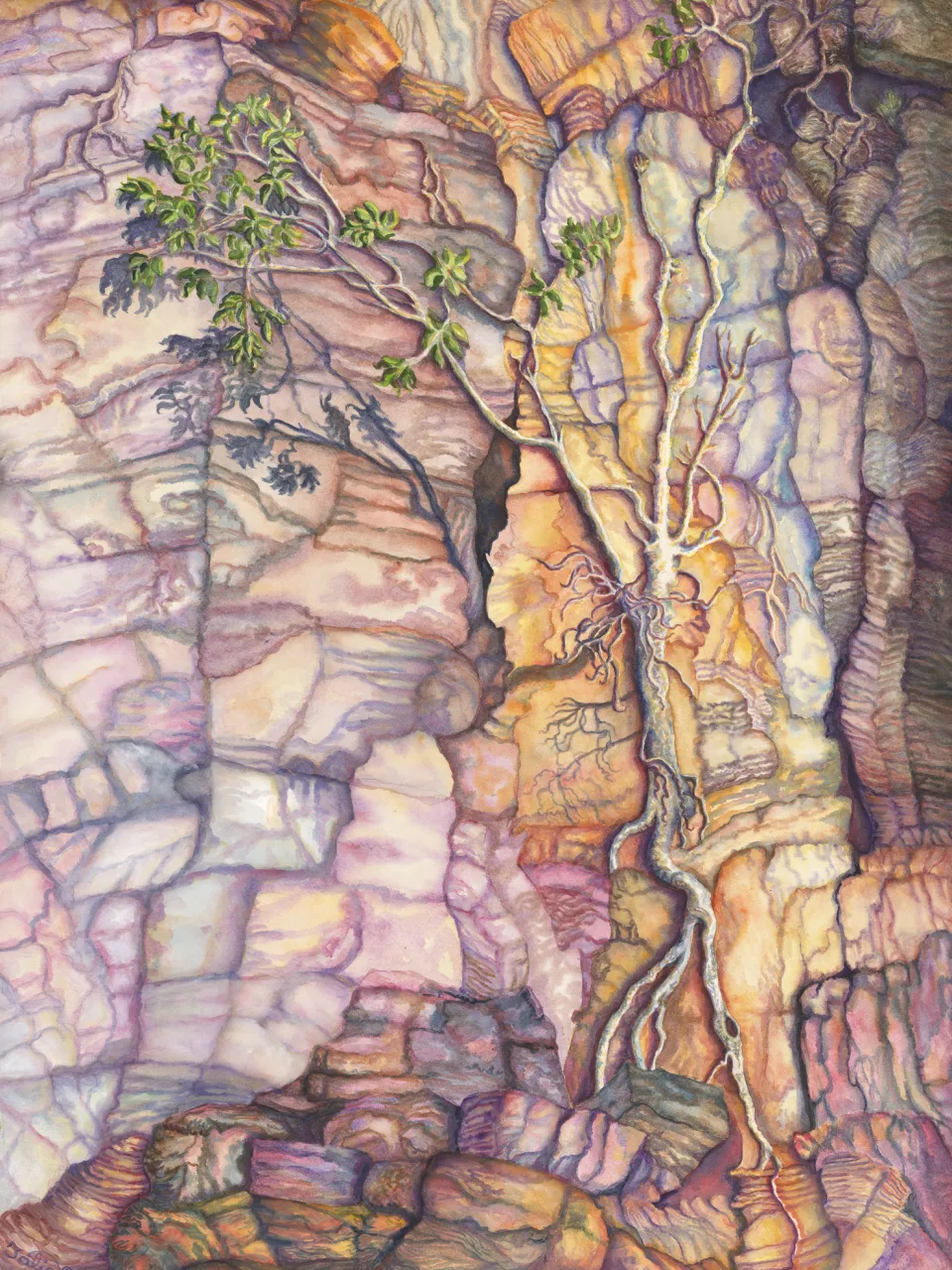
Only a few species of tree with rainforest affinities, such as this pittosporum, were able to adapt to the increasingly arid climate of inland Australia. By 8 mya the rainforest had disappeared from Central Australia (van Oosterzee, 1991, pp. 30–31). This painting shows clearly the desertification of an inland lake and how some species adapt to extreme conditions. These incredible plants display amazing ability to survive even when their sandy hillocks are eroded away leaving them with tangled aerial roots and branches sprouting in midair. The tree in the artwork spread flowers, fruits, and leaves over the skeletons of deceased wallaby ancestors which erosion had exposed over time. Pittosporum angustifolium is also known as “weeping pittosporum” and “apricot tree”— although the fruits are reported to be extremely bitter (Kutsche & Lay, 2003, p. 41)!
In a nearby lunette area of Willandra Lakes very early homo sapiens skeletons have been recovered, dating from around 42 thousand years old—very early for our species, but such new arrivals in comparison with plants such as the hardy pittosporum, which has occupied this ancient continent for at least 45 million years—and possibly, being rainforest-derived, 60 –80 million years. Humans may have migrated to Australia 50–60 thousand years ago, however our species only evolved at all in Africa some 200,000 years ago (Tuniz et al., 2009, pp. 36–43). The earliest human ancestors have been dated to about 7 million years old (Sahelanthropus tchadensis, found in Chad in Africa) (Walter, 2013, pp. 6–7). We are such newcomers on Earth!
This work was accepted into the South Australian Museum’s Waterhouse Natural History Art Prize and exhibited as part of this in 2004.